Small Gear Motor
Small Gear Motor
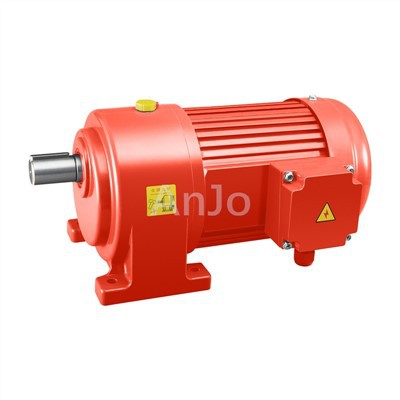
Small gear motors are power transmission devices that integrate a small electric motor and a reducer. They are characterized by their small size and light weight, which can reduce speed and increase torque, making them suitable for scenarios with specific requirements for installation space and output force.
Features
Provides greater driving force:
This is the fundamental purpose, enabling the device to push heavier loads.
Optimizes energy efficiency:
Allowing the motor to operate within its most efficient speed range, rather than forcing it to run at low speeds under load, saves more energy.
Reduced device size:
Compared to using a single high-power direct drive motor, using a combination of a small motor and a gearbox allows for a more compact design.
Applications
- Industrial Automation: Small conveyor belts, robotic arm joints, and actuators for automated sorting equipment.
- Intelligent Equipment: Automated parking systems, textile equipment, and lifting equipment.
FAQ
Q1: What is the core difference between a small geared motor and a regular motor?
A: The core difference lies in the integrated gear reducer. Regular motors typically output high-speed, low-torque power and cannot directly drive loads requiring high torque. Small geared motors, on the other hand, achieve "speed reduction and torque increase" through a built-in reducer, allowing them to directly output low-speed, high-torque power. Furthermore, the integrated design saves space, eliminating the need for additional transmission components.
Q2: How to maintain a small geared motor on a daily basis to extend its service life?
A: Key aspects of daily maintenance include: regularly checking lubrication; most small geared motors require grease replenishment every 3-6 months (depending on usage frequency); avoiding prolonged overload operation, as overload can burn out the motor or damage the gears; keeping the motor surface clean to prevent dust accumulation from affecting heat dissipation; and taking precautions against moisture when using in humid environments to prevent short circuits in the internal circuitry.
Q3: How to choose the right small geared motor for a project?
A: Determine the key parameters:
Torque: How much force does your load require to drive it? (This is the most important parameter!)
Speed: How fast does your equipment need to operate?
Power: What power does the motor need?
Operating Environment: Is it dusty, humid, hot, or corrosive?
Duration: Is it continuous or intermittent operation?
Q4: How long does a small geared motor typically last?
A: Lifespan depends on several factors, but is generally determined by the lifespan of the gears in the gearbox or the bearings in the motor. High-quality geared motors, under normal load and environment, typically have a lifespan of several thousand to tens of thousands of hours. The main factors affecting lifespan include:
Load: Prolonged overload operation will drastically shorten lifespan.
Lubrication: Insufficient or lost lubrication in the gearbox will lead to accelerated wear.
Operating Environment: Dust, high temperatures, and vibration will all negatively impact lifespan.
Q5: Why can't we use a low-speed motor directly, but instead need a gearbox?
A: There are three main reasons:
Insufficient torque: Directly manufacturing low-speed, high-torque micro-motors is very difficult and costly. The combination of a high-speed motor and a gearbox allows for a more economical and compact way to achieve high output torque.
Higher efficiency: Motors operate most efficiently at their rated high speed. Forcing a motor to drag a heavy object at low speed will result in high current, severe overheating, extremely low efficiency, and even burnout. The gearbox allows the motor to "run efficiently," while it "pushes" itself.
More precise control: For stepper and servo motors, gearboxes also improve resolution, enabling finer position and speed control.