


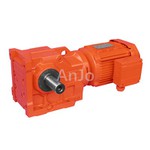
DC Brush Square Gear Motor
DC Brush Square Gear Motor
A DC brushed square gear motor is a power transmission device that integrates a DC brushed motor with a square-cased gear reducer. Its core principle is to achieve power output through the mechanical commutation of the brushed motor, and then reduce speed and increase torque through the square gearbox. It gets its name from the square structure of the reducer's housing. It is typically suitable for applications requiring regular installation space and low-speed, high-torque operation.
Features
- Low cost: The biggest advantage is that both the motor itself and the drive circuit are far less expensive than brushless motors.
- Simple drive: Only a DC power supply is needed (voltage can be adjusted by changing the voltage), no complex controller is required.
- Easy installation: The square housing makes it easy to fix in place.
- High starting torque: Brushed motors themselves have a high starting torque, and with a gearbox, the output torque is considerable.
Applications
Home appliances:
Electric toys, small appliances (such as electric blenders, coffee makers), automatic curtains.
Office equipment:
Printers, copiers (for paper feeding, scanning, etc.).
Industrial consumer goods:
Simple automated equipment, conveyor belts, coin-operated machines, etc.
FAQ
Q1: How to effectively maintain the motor during daily use?
A: Keep it clean: Regularly clean the exterior of the motor, removing dust and oil, especially the brushes and commutator area, to prevent conductive dust from affecting the commutator.
Regularly check the brushes: Pay attention to the wear of the brushes. Replace them promptly when they wear to a certain extent (e.g., the lifespan indicator lines). For large or important equipment, it is recommended to replace the brushes regularly. When replacing them, if conditions permit, it is best to replace them all at once. If it is inconvenient to stop the machine, you can replace them in batches (e.g., replace 20% at a time), with an interval of 1-2 weeks to allow the new brushes to break in before gradually replacing the remaining brushes.
Pay attention to listening and observation: Pay attention to whether the motor's operating sound is normal and whether there is any abnormal vibration, and detect potential problems early.
Q2: What key parameters should be considered when selecting a motor?
A: Voltage: Determine the motor's rated operating voltage (e.g., 12V, 24V DC).
Torque: Determine the rated and maximum torque required by the load.
Speed: Determine the required output speed. The reduction ratio will affect the final output speed and torque.
Gearbox Reduction Ratio: Determined based on the motor speed and the required output speed and torque.
Installation Space and Method: A square housing facilitates installation. Confirm the mounting hole positions, overall dimensions (especially the side length and total length of the square housing), and installation direction.
Q3: How to extend the service life of a motor?
A: Avoid prolonged overload operation and frequent start-stop cycles to reduce impact losses on carbon brushes and gears; use a stable power supply to prevent voltage fluctuations from damaging the windings and commutator; when using the motor in dusty or humid environments, install a dust and moisture cover; regularly polish away minor carbon deposits on the commutator surface to maintain good contact between the carbon brushes and the commutator.
