


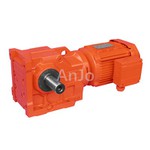
Micro Gear Motor
Micro Gear Motor
Miniature geared motors are small transmission devices that integrate a miniature electric motor with a reduction mechanism (gearbox). Their core function is to reduce the output speed of the motor and proportionally increase the torque through the reduction mechanism, while ensuring transmission accuracy. They are suitable for scenarios with limited installation space and precise requirements for output torque and speed, and are widely used in small automated equipment.
Features
High Torque:
A Core Advantage. It amplifies the motor's minute torque several times, even hundreds of times, through the gearbox, enabling it to drive heavier loads.
Reduced Output Speed:
It reduces the motor's high speed of thousands of revolutions per minute to a practical range of a few to a few hundred revolutions per minute.
Miniaturization and Lightweight Design:
Its compact structure provides powerful performance within a limited space.
Applications
- Smart Home and Small Appliances: Automatic feeders, biomass boilers
- Industrial Automation and Instrumentation: Small conveyor belts, actuators for sorting equipment, metering components for flow meters and other instruments, joint drives for miniature robotic arms.
FAQ
Q1: What precautions should be taken when using miniature motors in humid environments?
A: Prioritize dedicated models with waterproof protection ratings to prevent internal circuitry from short-circuiting due to moisture. For standard models, ensure proper sealing to prevent moisture from seeping into the junction box and motor housing gaps. Regularly check the motor's insulation performance by testing the winding insulation resistance with a multimeter to prevent insulation degradation due to moisture. Simultaneously, control the ambient humidity, ideally not exceeding 90%, and avoid frequent starting and stopping of the motor in high-humidity environments with alternating hot and cold temperatures to reduce condensation corrosion of internal components.
Q2: What are the key points for daily maintenance of micro motors?
A: First, cleaning: Regularly clean the motor surface and air inlet to remove dust and oil, ensuring heat dissipation and mechanical operation. Second, lubrication: For models with bearings, replenish grease every 3-6 months; shorten the interval in harsh environments. Third, tightening: Regularly check the terminals and fixing bolts to prevent loosening due to vibration. Fourth, testing: Every six months, use instruments to test the current, voltage, and winding insulation; if any abnormalities are found, stop the machine immediately for troubleshooting.
Q3: How do I choose the right micro motor for my project?
A: Following these steps will be helpful:
Define your needs:
What is my power source? (Battery? AC? What is the voltage?)
How much torque do I need? (Calculate or estimate load requirements)
How high a speed do I need?
Do I need speed control, forward and reverse rotation?


