


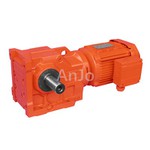
Stainless Gearbox
Stainless Gearbox
The main material of the stainless steel speed reducer (especially the housing and some internal parts) is stainless steel. It is essentially an upgraded version of the material to adapt to special environments such as hygiene, humidity and corrosion. By using stainless steel, the pain points of ordinary speed reducers that are prone to corrosion, rust and are difficult to clean in harsh environments are solved.
Features
Superior Corrosion Resistance:
This is the core advantage. It resists erosion from various corrosive media such as water vapor, acids, alkalis, salts, and detergents.
Unlike ordinary steel, it won't rust, maintaining a clean product appearance.
Easy to Clean and Disinfect:
The smooth, non-porous surface prevents the accumulation of dirt and bacteria.
It can withstand frequent cleaning with high-pressure water jets, steam sterilization, or chemical disinfectants.
Meets Hygiene Standards:
The material itself is non-toxic and non-polluting, and will not contaminate products due to rust.
It is the first choice for industries such as food and pharmaceuticals that enforce mandatory hygiene regulations (such as GMP and HACCP).
Applications
Food and Beverage Processing:
Meat processing, dairy products, brewing, and beverage bottling lines. Requires frequent cleaning to prevent bacterial growth and must withstand corrosion from food additives.
Pharmaceuticals and Cosmetics:
Pharmaceutical production lines and mixing equipment. Must meet GMP standards to ensure sterility and zero contamination.
Chemical Industry:
Environments with chemical fumes or liquid splashes from acids, alkalis, etc.
Marine and Shipbuilding:
Marine equipment and dock equipment. Resistant to salt spray corrosion.
Water Treatment and Environmental Protection:
Wastewater treatment plants and wet environments. Resistant to water, chemicals, and humid environments.
High Temperature and High Humidity Environments:
Such as high-temperature sterilization rooms and cleaning rooms.
FAQ
Q1: What are the common structural types of stainless steel speed reducers?
A: It's not a fixed structural type; the mainstream types include stainless steel worm gear reducers, stainless steel helical gear reducers, and stainless steel bevel gear reducers. Among these, the worm gear type is suitable for small to medium loads and applications requiring a large reduction ratio, such as small food mixing equipment.
Q2: What special precautions should be taken during installation?
A: First, avoid welding damage. If welding of surrounding components is required on-site during installation, the stainless steel housing must be shielded to prevent weld spatter from causing corrosion. Second, ensure a tight seal. When installing flanges or feet, the gaskets must be made of chemically resistant materials (such as silicone gaskets) to prevent ordinary gaskets from aging and contaminating the working environment. Third, maintain concentricity. When connecting to the motor, the shaft deviation must be controlled within the coupling's allowable range to prevent vibration during operation from causing seal failure.
Q3: Are there any special requirements for the compatible lubricating oil?
A: Oil selection should be based on operating conditions: For the food and pharmaceutical industries, FDA-certified food-grade greases or lubricating oils must be used to prevent leakage and product contamination; for marine or humid environments, special anti-emulsification and anti-corrosion lubricating oils should be used to prevent emulsification and failure upon contact with water; for conventional stainless steel gearboxes, avoid using oils containing corrosive additives such as chlorine. It is recommended to change the oil after the first 500 hours of use, and thereafter every 1000-2000 hours depending on operating conditions.
Q4: What causes rust spots on a stainless steel casing?
A: It's most likely not the casing itself that's rusted. It's more likely that rust is caused by ferritic impurities on the surface, such as carbon steel dust or welding slag that adhered during installation and then formed rust spots after prolonged exposure to a humid environment. Alternatively, scratches on the stainless steel surface could damage the protective layer, leading to localized corrosion upon contact with corrosive media. Furthermore, using chlorine-based cleaners to clean the casing can also damage the stainless steel passivation layer, resulting in rust.
Q5: What are the key points of daily maintenance?
A: First, regular cleaning: Wipe the housing with a neutral detergent to avoid residual chemicals corroding the surface. For the food industry, this should be done in conjunction with the equipment's CIP (Clean-In-Place) cleaning process. Second, regular inspection: Monitor the bearing and housing temperatures monthly with an infrared thermometer, record temperature changes, and promptly investigate any abnormalities. Third, rust prevention: When the machine is to be shut down for an extended period, apply rust-preventive oil to exposed areas such as the shaft ends and cover them with dust covers. Fourth, tightness checks: Inspect the anchor bolts and flange bolts quarterly to prevent loosening due to vibration.
