


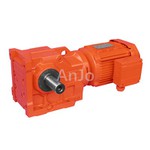
Stainless Steel Motor
Stainless Steel Motor
Stainless steel motor refers to a motor whose main structural components (such as casing, end cover, shaft, etc.) are made of stainless steel materials. A high-performance special motor designed to cope with harsh environments. Its core value is not to provide more power, but to provide stable, reliable and long-life operation guarantee in corrosive, humid or environments that require high hygiene standards.
Features
Excellent corrosion resistance:
Resistant to corrosion from various acids, alkalis, salts, and other chemicals. It will not rust in humid, high-salt environments (such as coastal areas and offshore platforms).
Extremely high hygiene standards:
The dense, smooth stainless steel surface does not easily adhere to residues, making it easy to clean and disinfect. Unlike painted motors, its surface coating may peel off and contaminate the product or the environment.
Easy to clean and maintain:
Can be directly pressure-washed with water, steam, or corrosive cleaning agents (IP protection ratings are typically very high, such as IP66/IP69K) without worrying about damaging the motor housing.
Applications
- Food and Beverage Industry: Meat processing equipment, dairy production lines, beverage filling machines, baking equipment, etc.
- Pharmaceutical and Medical Industry: Mixing equipment, filling lines, cleanroom ventilation systems, medical equipment.
- Chemical Industry: Pumps, fans, and mixing equipment in chemical plants, especially in areas with acid or alkali corrosion.
- Marine and Shipbuilding Industry: Marine pumps, deck machinery, seawater desalination equipment.
- Water Treatment and Wastewater Treatment: Pumps and aerators exposed to humid and chemical environments.
- High Humidity Environments: Cold storage facilities, laundry rooms, swimming pools, etc.
FAQ
Q1: Are there any special requirements for the protection rating of stainless steel motors?
A: Their protection ratings are generally high, commonly IP55, IP66, and IP69K. IP69K is a high-level rating commonly used in industries such as food processing, capable of withstanding high-pressure cleaning of 80-100 bar and handling frequent, forceful washing operations. For outdoor or humid environments, IP66 and higher ratings are often chosen to prevent moisture and impurities from entering the motor.
Q2: What are the key points for daily maintenance of stainless steel motors?
A: First, cleaning: It is recommended to clean the surface monthly to remove contaminants and maintain hygiene and heat dissipation. Avoid using strong corrosive cleaning agents that could damage the stainless steel surface. Second, lubrication: Perform bearing lubrication annually to ensure smooth operation. Third, inspection: Conduct a comprehensive inspection every six months to check for corrosion, component wear, decreased insulation, and other problems. Address any abnormalities promptly.
Q3: What are the advantages and disadvantages of stainless steel motors compared to ordinary cast iron motors?
A: Advantages include corrosion resistance, smooth and easy-to-clean surface, suitability for harsh and clean environments, and longer service life under special working conditions. Disadvantages include a significantly higher cost than ordinary cast iron motors, and higher production costs for stainless steel motors of the same power output.
Q4: Are all stainless steel motors made entirely of stainless steel?
A: Yes, ANG Drive's stainless steel motors: the main structural components such as the housing, end caps, fan cover, and shaft are all made of stainless steel. This results in the highest cost and excellent corrosion resistance.
Q5: Can stainless steel motors be rinsed directly with water?
A: Yes, this is often one of their primary design goals. However, this is contingent on the motor's protection rating (IP code) being high enough. Motors intended for rinsing typically need to meet IP66 or higher.


