


Motor
Motor
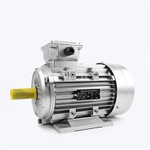
An electric motor, commonly known as a "motor," is a device that converts electrical energy into mechanical energy. The operation of an electric motor is based on the law of electromagnetic induction. Current flows through the coils (windings) inside the motor, creating a strong magnetic field in the iron core. The current-carrying coils in this magnetic field experience electromagnetic force, causing the motor's rotor (rotating part) to rotate, ultimately converting electrical energy into mechanical energy that can drive equipment.
Application
• Industry: Powering various machine tools, conveyors, cranes, compressors, and robots.
• Transportation: Electric vehicles, high-speed trains, electric bicycles, and ship propulsion.
• Home Appliances: Refrigerators, air conditioners, washing machines, vacuum cleaners, electric fans, and range hoods.
• Electronic Products: Computer hard drives and cooling fans, mobile phone vibration motors.
• Office Equipment: Printers and copiers.
• Medical Devices: Various precision surgical tools and equipment.
Advanced
High efficiency:
It can convert most of the input electrical energy into mechanical energy, far exceeding the efficiency of heat engines.
Precise control:
Speed, torque, and position can be precisely controlled easily by adjusting the current.
Clean and environmentally friendly:
It does not produce direct exhaust pollution during operation. If the electrical energy comes from clean energy sources, the entire process is environmentally friendly.
Easy to use:
Energy (electricity) transmission and distribution are very convenient.
Advantages
Excellent speed regulation performance:
A wide range of smooth speed adjustments with high precision can be achieved by changing the armature voltage or excitation current.
High starting torque:
It can output a large torque during startup, suitable for scenarios requiring heavy-load starting (such as cranes and elevators).
Simple control:
No complex frequency converter equipment is needed; the speed can be controlled through a simple DC speed controller.
Types of motor
- Single-phase motors use single-phase AC power, resulting in a simple structure and low cost. They are mostly low-power models, suitable for small machinery and other applications where high power output is not required.
- Three-phase motors operate on three-phase AC power, offering stable operation, high efficiency, and strong load-bearing capacity. They have a wide power range (from hundreds of watts to hundreds of kilowatts), good starting performance, and are the mainstay motors in industrial production, commonly used in pumps, fans, machine tools, conveyor belts, and other general-purpose machinery.
- DC motors are driven by DC power, achieving continuous rotation through a commutator. They offer excellent speed control performance (flexible speed adjustment via voltage and magnet adjustment), high starting torque, and are suitable for applications requiring precise speed control and high starting torque, such as machine tool servo systems and power sources for small equipment.
- Stepper motors convert electrical pulse signals into angular/linear displacement, performing "one step, one movement." They offer high positioning accuracy and fast response, enabling open-loop control without feedback, and are commonly used in printers, CNC machine tools, positioning mechanisms in automated equipment, and robot joints.
- Stainless Steel Motor: Made of stainless steel for both the outer shell and core components, offering excellent corrosion resistance, rust prevention, and water resistance. Suitable for harsh environments such as humid, acidic, alkaline, and dusty conditions, and commonly used in food processing equipment, chemical machinery, water treatment equipment, marine environment equipment, and other applications requiring material protection.
- Vibration Motor: Generates directional vibration through the rotation of an eccentric block. The vibration frequency and amplitude are adjustable. With a robust structure and high vibration resistance, it is the core power source for vibrating equipment, suitable for industrial equipment such as vibrating screens, vibrating feeders, vibrating conveyors, and vibrating molding machines.
Why choose us
Quality and Reliability:
We use high-quality materials and stringent manufacturing standards (such as the ISO 9001 quality management system) to ensure that every motor has a long lifespan, high efficiency, and stable and reliable performance, minimizing your downtime.
Application Experts, Not Just Salespeople:
Our team consists of experienced engineers who can provide you with in-depth technical advice, not just product quotes. We can help you select the right model, optimize your design, and solve practical problems you encounter in your applications.
Rapid Local Support:
We understand the importance of time to you. We offer fast quotes, flexible delivery times, and efficient logistics services to ensure you receive the products you need in a timely manner.
FAQ
Q1: How should I choose the right motor type?
A: Choosing the right motor depends primarily on your application requirements. Please consider the following key factors:
Power Supply: Are you using AC (single-phase or three-phase) or DC (battery or adapter)?
Control Requirements: Do you need simple start/stop, or precise speed, position, or torque control?
Load Characteristics: Is the load constant or variable? What starting and running torque is required?
Environmental Conditions: Is the environment humid, dusty, corrosive, or explosive?
Our technical sales team can provide you with free selection guidance. Please provide your specific application parameters, and we will recommend the most suitable model for you.
Q2: Can you provide custom motors?
A: Yes, we would be delighted! We offer in-depth customization services, including but not limited to:
Special voltage, frequency, and speed.
Specific mounting methods (flanges, bases, etc.) and shaft extension dimensions.
Higher protection ratings (IP65, IP68, etc.) or explosion-proof ratings.
Special cables, connectors, or brakes.
Please contact us and provide your detailed requirements, and our engineers will work with you.
Q3: What is the delivery time?
A: The delivery time for standard products is usually short, generally 30 days. The delivery time for customized products needs to be confirmed separately based on technical requirements and production plans. We will do our best to meet your delivery requirements.
Q4: What is the warranty period for the motor?
A: We offer a warranty for all products 12 months, calculated from the date of product delivery. Please refer to our warranty policy for specific terms.


