





Full Step Stepper Motor
What is a Full Step Stepper Motor?
Stepper motors-specifically two-phase hybrid stepper motors-achieve angular positioning through pulse signals. For every set of pulses received, the motor rotates by a fixed step angle, ensuring **no cumulative positioning error**. They serve as the primary drive solution for multi-axis synchronized positioning in small to medium-sized equipment. Unlike standard AC asynchronous motors, stepper motors do not rely on closed-loop speed feedback; instead, they utilize a driver to achieve precise displacement control through micro-stepping. With a simple structure and manageable costs, they are ideal for applications involving low speeds, frequent start-stop cycles, and repetitive point-to-point positioning.
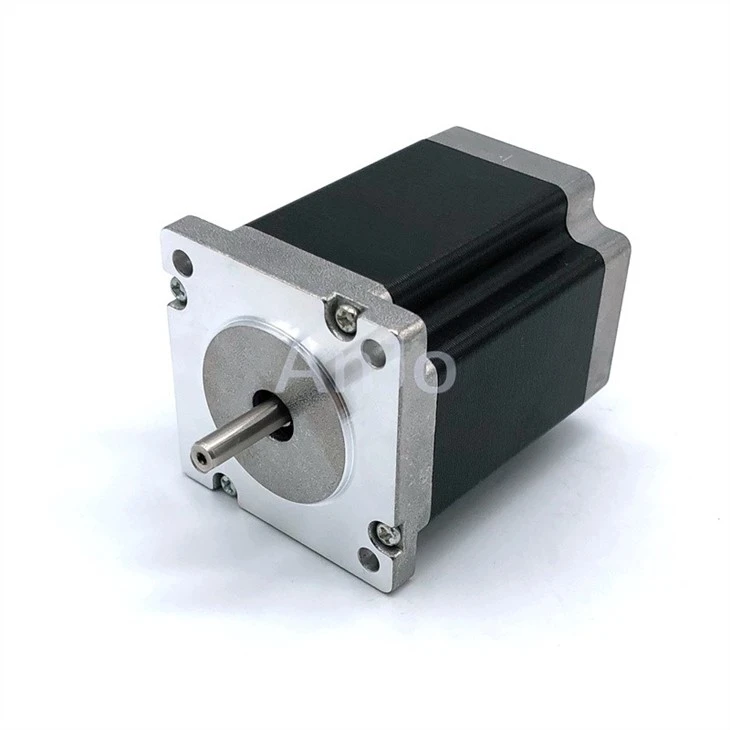
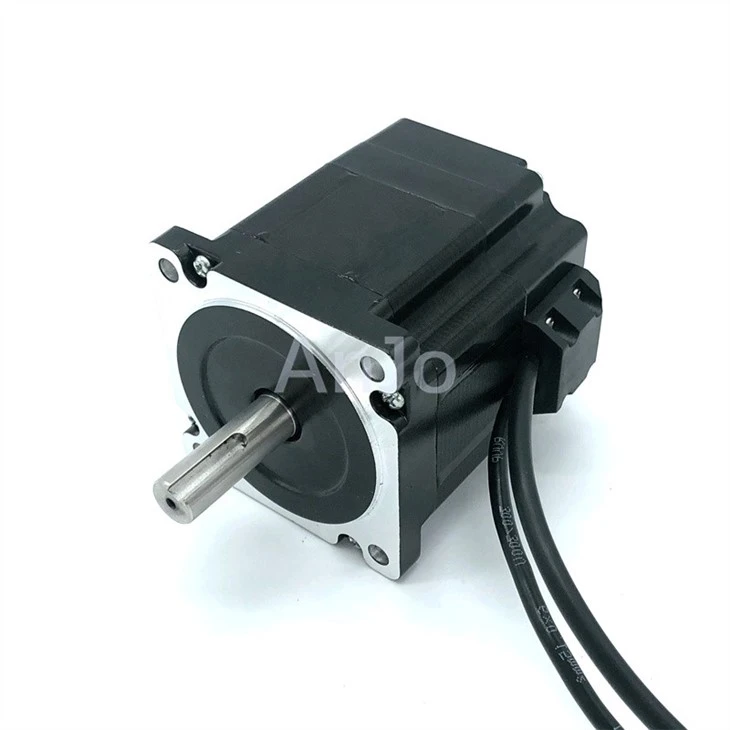
We offer motors in standard flange sizes-42, 57, and 86-with options for single-shaft, dual-shaft, or integrated brake configurations, paired with compatible micro-stepping drivers. Each unit undergoes rigorous factory testing, including torque-frequency curve analysis, temperature rise monitoring, and vibration sampling. The windings utilize high-temperature-resistant enameled wire, while the stator and rotor are constructed from high-permeability silicon steel sheets. These motors ensure smooth operation and are well-suited for automated equipment such as engraving machines, packaging machinery, small-scale CNC systems, 3D printers, and inspection jigs. We support sample testing and volume OEM production, with customization options available for shaft extensions, keyways, and wiring configurations based on customer-provided drawings.


1. Precise Pulse-Based Positioning with No Cumulative Error
With a standard step angle of 1.8°, the motor can be configured via the driver for microstepping (1/2, 1/4, 1/8, 1/16, or 1/32), achieving higher resolution. Positional error is confined to a single step and does not accumulate over continuous operation-making it ideal for repetitive point-to-point processing and indexed feeding.
2. Holding Torque at Rest to Lock Load Position
The motor maintains holding torque when powered, allowing it to lock the shaft position while stopped without the need for an additional braking mechanism. For applications involving vertical loads or requirements to lock the position during downtime, an electromagnetic brake option is available to firmly secure the shaft upon power loss, preventing the load from sliding downward due to its own weight.
3. Adjustable Microstepping for Improved Low-Speed Smoothness
The driver supports various microstepping settings, which reduce inherent vibration and noise while helping to avoid resonance ranges. This eliminates noticeable jitter during low-speed operation, making the motor well-suited for tasks that demand high smoothness, such as engraving, marking, and precision feeding.

| Type | 2-phase bipolar |
| Standard step angle |
1.8°
|
| Rated voltage |
DC 12V/24V/36V
|
| Single-phase rated current |
1.5A-3.0A/Phase
|
| Phase resistance/inductance |
1.0-1.5Ω / 3.0-4.5mH
|
| Holding torque |
0.4-2.8N·m
|
| Wiring method | 4-wire bipolar connection |
| Operating temperature |
-15℃~+60℃
|
| Protection rating |
IP40
|
| Insulation class | B |


* For more sizes, please contact our sales team


Q1: What are the core differences between stepper motors and servo motors?
A1: Stepper motors typically operate via open-loop control; they are cost-effective, offer stable positioning at low speeds, and do not accumulate positional error. However, they are prone to "losing steps" when operating at high speeds or under high acceleration. Servo motors, by contrast, utilize closed-loop feedback via an encoder to verify position in real time. They offer superior dynamic performance at high speeds, do not lose steps, and come at a higher price point.
Q2: What is a "lost step" (step loss)? What causes it?
A2: A lost step occurs when a pulse is issued, but the motor fails to rotate accordingly. Common causes include: insufficient torque margin, excessive acceleration, a mismatch in load inertia, a driver current setting that is too low, or interference affecting the pulse signals.
Q3: Does a higher microstepping setting result in higher positioning accuracy?
A3: Microstepping breaks a single step down into smaller steps, which improves the smoothness of motion. However, the inherent mechanical accuracy limit of the motor itself remains unchanged; microstepping cannot infinitely improve absolute accuracy. Furthermore, excessively high microstepping increases the pulse load on the controller.
Hot Tags: full step stepper motor, China full step stepper motor manufacturers, suppliers, factory
Previous
220V 3 Phase MotorYou Might Also Like


Send Inquiry