


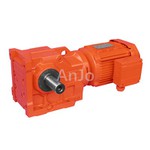


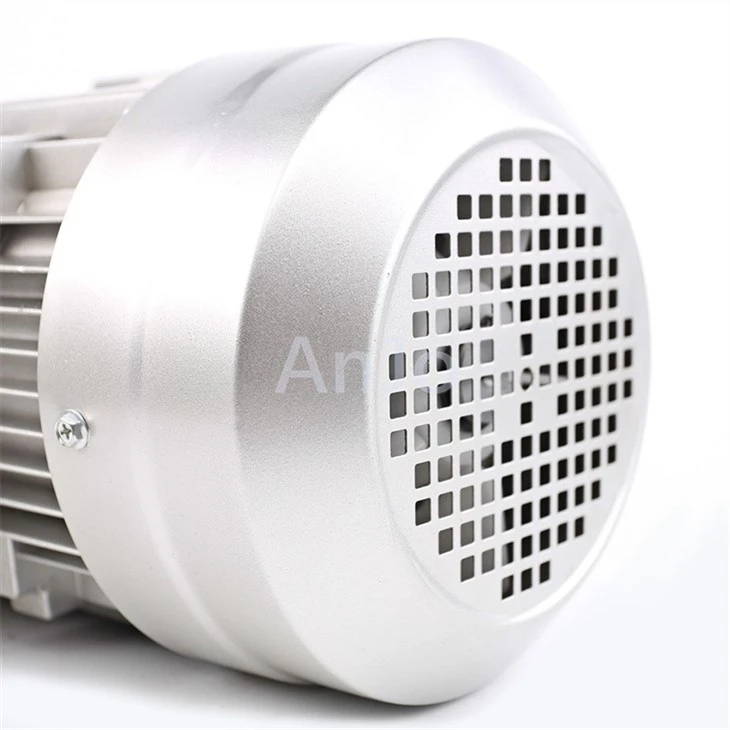
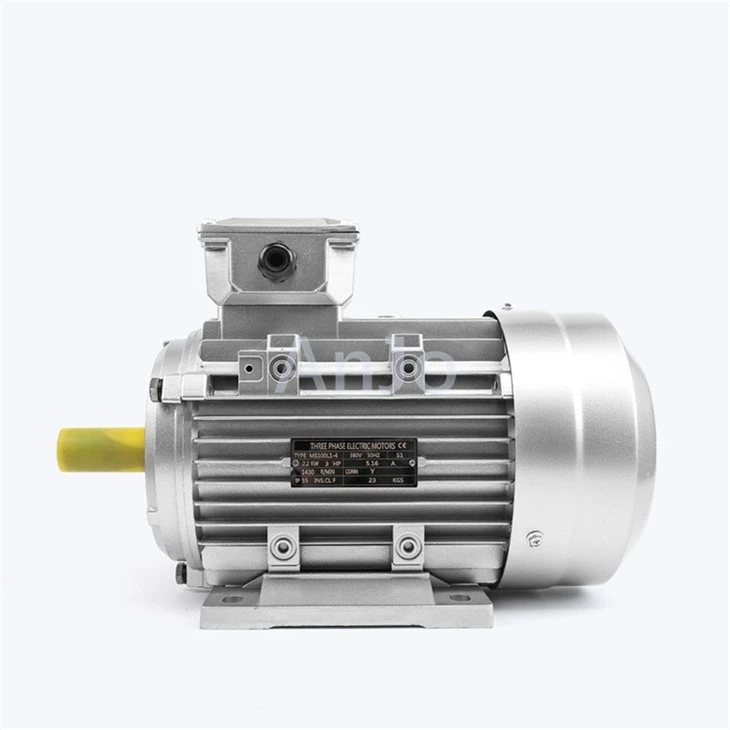
220V 3 Phase Motor
What is a 220V 3 Phase Motor?
Designed for a 220V three-phase power supply, this three-phase squirrel-cage asynchronous motor comes factory-configured with a delta (Δ) connection. It is also frequently paired with single-phase input, three-phase output variable frequency drives (VFDs)-a common power solution for small-scale industrial equipment in many regions overseas.
Compared to single-phase 220V motors, these three-phase motors eliminate the need for starting capacitors or centrifugal switches, resulting in a simpler design, smoother starting torque, and balanced operating currents-making them ideal for continuous, heavy-duty operation. Unlike stepper motors, they are designed for sustained, constant-speed driving rather than precise point-to-point positioning. The stator is constructed from high-purity cold-rolled silicon steel sheets with pure copper windings, and the motor is available with either a cast-iron or aluminum housing. Manufactured in accordance with the GB/T755 standard, each unit undergoes rigorous factory testing, including dielectric strength, locked-rotor, temperature rise, and vibration checks. These motors are widely used in water pumps, fans, conveyor systems, and small-scale processing machinery. They are suitable for retrofitting existing equipment or for integration into new OEM machinery, with options available for custom shaft diameters, flanges, brakes, and encoders.
Models


Features
1. Balanced Three-Phase Drive with Minimal Wear-Prone Components
Eliminating the need for start or run capacitors removes risks such as capacitor bulging or centrifugal switch failure. The symmetrical three-phase current ensures stable torque output and a significantly lower failure rate during long-term, continuous operation compared to single-phase motors of the same power rating, making these units ideal for S1 (continuous duty) applications.
2. Optimized for Variable Frequency Drive (VFD) Speed Control
The winding insulation is specifically optimized for VFD-driven operation, allowing for stepless speed control. 2-pole, 4-pole, and 6-pole models can all operate at reduced speeds via a VFD. Furthermore, the use of a VFD enables soft-starting and current-limited starting, which reduces the mechanical stress-and potential damage-to the motor frame and transmission components during startup.
3. IP55 Protection for Robust Performance in Industrial Environments
Featuring a standard TEFC (Totally Enclosed Fan-Cooled) design, these motors offer IP55-rated protection against dust and water splashes-surpassing the IP44 rating typical of standard single-phase motors. They are well-suited for environments such as machining workshops (where dust is present), pump stations, or outdoor shaded installations, as they are highly resistant to dust ingress and mechanical jamming.
Products Description
|
Model |
0.09~3kW Motor |
|
Frame |
56~100 |
|
Power |
0.09~3kW |
|
Speed |
3000rpm, 1500rpm, 1000rpm |
|
Voltage |
220/380V, 230/400V, or customization |
|
Frequency |
50HZ/60HZ |
|
Efficiency |
IE1, IE2, IE3, IE4 |
|
Cooling |
Fan |
|
Protection |
IP44/IP54/IP55 |
|
Housing |
Aluminum/Cast Iron |
|
Ambient temperature |
-15℃≤0℃≤40℃ |
|
Altitude |
No exceeding 1000 meters |
|
Duty |
S1 |
Drawings


Installation position

Our advantages

Production


Application


Company Profile


FAQ
Q: What is the core difference between a three-phase 220V motor and a single-phase 220V motor?
A: A three-phase 220V motor relies on a three-phase rotating magnetic field for startup; it requires no capacitor or centrifugal switch, offers stable starting torque and balanced current, and is well-suited for long-term, continuous, heavy-duty operation. In contrast, a single-phase 220V motor relies on a capacitor for phase-splitting to initiate startup; its capacitor and centrifugal switch are prone to wear, making it better suited for light-duty or intermittent operating conditions.
Q: What is the minimum rotational speed achievable when using a variable-frequency drive (VFD)?
A: For versions without an independent cooling fan, it is recommended not to operate the motor continuously at speeds below 50% of its rated speed. If continuous operation at lower speeds is required, an independent cooling fan must be installed to prevent overheating due to inadequate heat dissipation.
Q: For motors of the same power, which draws a higher current: a three-phase 220V motor or a three-phase 380V motor?
A: The three-phase 220V version has a higher rated current. When power remains constant, a lower voltage results in a higher operating current. When selecting circuit breakers, cables, or variable frequency drives (VFDs), you must always base your choice on the current specified on the motor's nameplate; do not simply apply the current parameters used for a 380V motor.
|
|
|
|
|
|
|
|
|
|
|
|
|
|
|
|
|
|
|
|
|
|
|
|



Hot Tags: 220v 3 phase motor, China 220v 3 phase motor manufacturers, suppliers, factory
Previous
NMRV Worm Gear ReducerYou Might Also Like


Send Inquiry