


Electric Motor Shaft
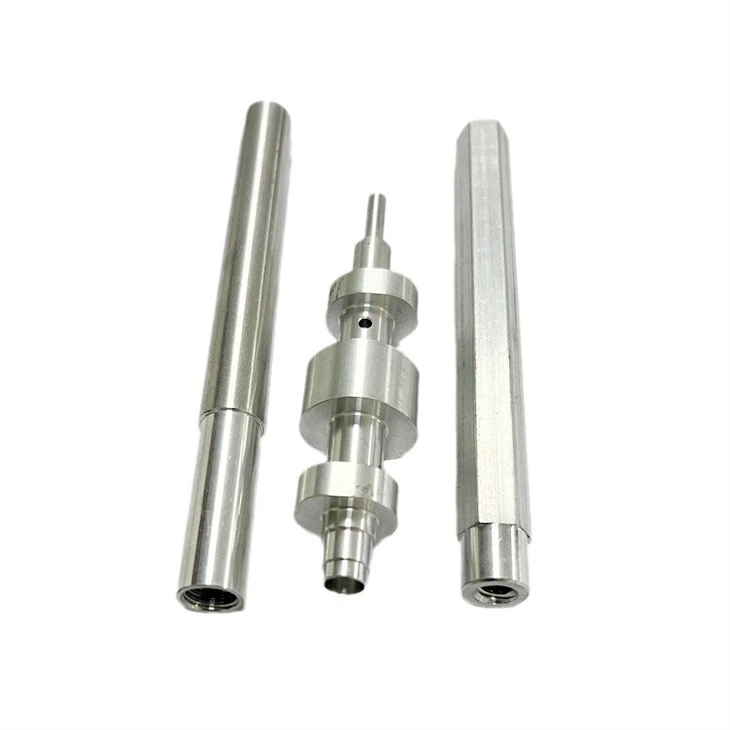
The motor shaft serves as the core load-bearing component for power transmission, connecting the rotor core to bearings, couplings, or gears. It directly determines the motor's coaxiality, vibration levels, fatigue life, and transmission precision. While standard motor shafts come in fixed specifications, they often fail to meet the requirements for non-standard or modified motors, specialized gear reducer integrations, or high-speed/high-torque operating conditions.
Our custom motor shaft service accommodates three types of project specifications: **provided technical drawings, physical samples, or detailed parameter-based designs**. We support a wide range of motor types, including asynchronous, permanent-magnet DC, brushless, stepper, and servo motors, as well as input/output shafts for planetary gearboxes. Utilizing an integrated manufacturing process-encompassing CNC turning, cylindrical grinding, keyway milling, gear hobbing, nitriding, and quenching & tempering-we maintain strict control over tolerances and runout for bearing seats, core mounting areas, and sealing surfaces. We are equipped to handle both large-scale production runs and small-batch prototyping.
Models
Features
1. Fully customizable structural design to meet diverse motor assembly requirements
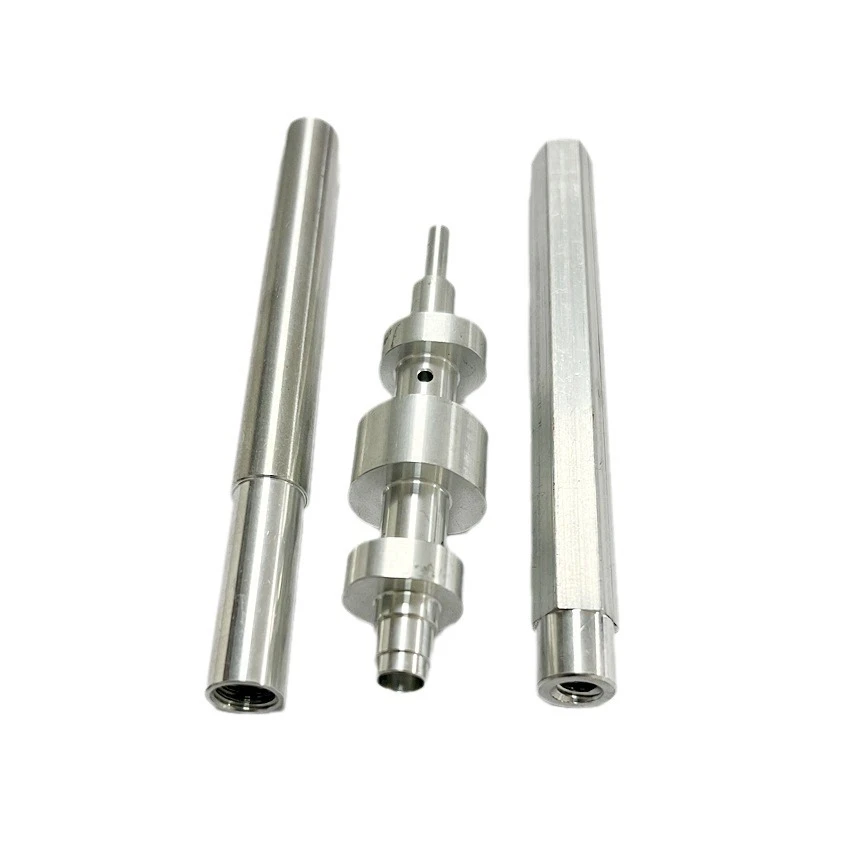
Supports various shaft configurations, including stepped, plain, hollow, splined, D-cut (flatted), threaded, and integrated gear shafts. Capabilities include machining for parallel keys, Woodruff keys, internal/external splines, knurling, thrust shoulders, and oil seal grooves. Designed for seamless integration with press-fitted bearings, heat-fitted cores, locking assemblies, and direct-coupled connections.
2. Tiered tolerance control with precision grinding for critical mating surfaces
Standard turning is employed for general transmission applications, while bearing seats and core-mating surfaces undergo external cylindrical grinding. Tolerances can reach h6, k5, or m5, with strict adherence to specified circular runout, cylindricity, and coaxiality requirements-effectively minimizing post-assembly vibration, premature bearing failure, and oil seal leakage.
3. Material selection and heat treatment tailored to specific operating conditions
45# steel is used for standard light-to-medium load applications; 40Cr and 42CrMo alloy steels are utilized for high-torque or high-impact environments; 20CrMnTi is ideal for carburizing and quenching; and 304/316 stainless steel is selected for corrosive environments, such as those involving moisture, saline conditions, or food-processing sanitation requirements. Surface treatments-including quenching and tempering, induction (high-frequency) hardening, nitriding, black oxide coating, and hard chrome plating-are available to enhance wear resistance, fatigue strength, and corrosion protection.
Application


Why choose our controller
High Efficiency and Energy Saving:
Energy conversion efficiency is over 95%, saving 10%-20% compared to ordinary controllers, significantly reducing long-term operating costs.
Wide Speed Range and High Control Accuracy:
Speed control accuracy error is ≤±0.5%, enabling smooth operation at low speeds without jitter and precise response at high speeds without step loss.
Strong Anti-interference:
The circuit board uses a three-proof coating process (moisture-proof, salt spray-proof, and mildew-proof), and has a built-in EMC electromagnetic compatibility module, allowing it to operate stably in industrial environments with high temperature, high dust, and strong electromagnetic interference.
Company Profile


FAQ
Q1: What is the main difference between a custom motor shaft and a standard motor shaft?
A1: Standard shafts have fixed dimensions, keyways, and stepped sections, designed to fit only specific motor frames. Custom shafts, by contrast, allow for flexible adjustments to stepped sections, tolerances, splines, threads, and heat treatment, making them suitable for modified motors, non-standard gearboxes, and specialized mounting configurations.
Q2: Why must the bearing seat on a motor shaft be finished by grinding-is turning not sufficient?
A2: Standard turning processes often struggle to meet the requirements for bearing fits in terms of surface roughness, roundness, and cylindricity. Inadequate precision can lead to overheating, abnormal noise, and premature bearing wear during long-term operation. For high-speed, high-precision applications, bearing seats must be finished by grinding.
Q3: How should one choose between 42CrMo and 40Cr?
A3: 40Cr is suitable for standard, moderately loaded applications involving typical impact. 42CrMo offers superior hardenability, higher strength at elevated temperatures, and better fatigue resistance; it is ideal for shafts subjected to high torque, continuous impact, or heavy-duty, high-speed operation-though it comes at a higher cost.
Hot Tags: electric motor shaft, China electric motor shaft manufacturers, suppliers, factory
Previous
Transmission Drive ChainYou Might Also Like


Send Inquiry