


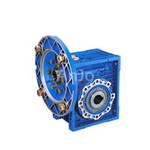
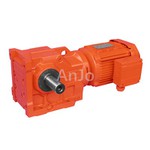


Inline Helical Gear Reducer
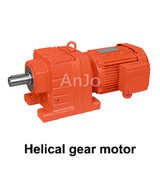
What is an Inline Helical Gear Reducer
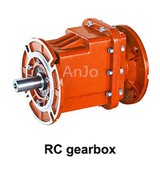
An inline helical gear reducer is an industrial transmission device in which the input and output shafts are aligned along the same axis. Utilizing a multi-stage external-meshing structure featuring involute helical cylindrical gears, it is widely employed across various industrial sectors, including automated production lines, material handling systems, mixing equipment, and environmental treatment facilities. Compared to traditional transmission solutions, this coaxial configuration saves approximately 30% of installation space while significantly reducing operational vibration; furthermore, thanks to its symmetrical geometric structure, it subjects the bearings to lower stress, thereby ensuring a longer service life.





Integrated Cast Housing: Compact and Reliable Structure
The housing features a one-piece cast design, ensuring excellent structural rigidity. This effectively guarantees the strength and service life of the gears and bearings.
Low-Noise Operation: Ideal for Quiet Environments
The helical gears feature spiral-shaped tooth surfaces; during engagement, multiple teeth make simultaneous contact, resulting in minimal impact and low noise levels. Operating noise is maintained at ≤65 dB(A), making this unit particularly well-suited for applications requiring a quiet environment-such as medical equipment, laboratory instruments, and food packaging facilities.
Modular Design: Flexible Configuration and Convenient Maintenance
Utilizing a modular unit-structure design principle, the system significantly reduces the variety of components and inventory requirements, thereby substantially shortening delivery lead times. The R Series can be flexibly combined with various other reducer series-including the K Series (helical-bevel), F Series (parallel-shaft), and S Series (helical-worm)-to achieve a wider range of speed ratios and enhanced adaptability to diverse operating conditions.


| Model | R series Inline Helical Gear Reducer |
| Ratio | 1.3~289.74 |
| Output torque | 10Nm - 26000Nm |
| Input power | 0.12~200KW |
| Gear structure | Two-Stage/Three-Stage |
| Efficiency | 94% - 96% |
| Gear material | Alloy Steel Hardened Gear Teeth |







Q1: What are the main differences between coaxial helical gear reducers and parallel-shaft reducers?
A1: In coaxial reducers, the input and output shafts are aligned along the same axis, making them suitable for linear power transmission. In parallel-shaft reducers, the axes of the input and output shafts are parallel but not collinear. The coaxial structure is more compact and generates less vibration, making it ideal for equipment with limited space; the parallel-shaft structure, conversely, can handle higher torque loads and is better suited for heavy-duty, long-distance transmission applications.
Q2: What do the numbers in the R-series reducer model designations represent?
A2: For instance, in the model R47, the number "47" denotes the frame size. A larger number indicates a larger housing dimension and a higher torque-carrying capacity. The R-series encompasses 13 distinct frame sizes, ranging from R17 to R167; the largest frame size, R167, is capable of accommodating a 132 kW motor.
Q3: How can one determine whether to select the RM series, which is specifically designed for mixing applications?
A3: When equipment is required to withstand significant axial and radial forces-such as the suspended loads exerted on the mixing shaft in mixing machinery-the RM series, specifically engineered for mixing applications, should be selected.
|
|
|
|
|
|
|
|
|
|
|
|
|
|
|
|
|
|
|
|
|
|
|
|



Hot Tags: inline helical gear reducer, China inline helical gear reducer manufacturers, suppliers, factory
Previous
Inline Motor GearboxYou Might Also Like


Send Inquiry