


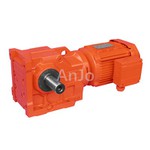
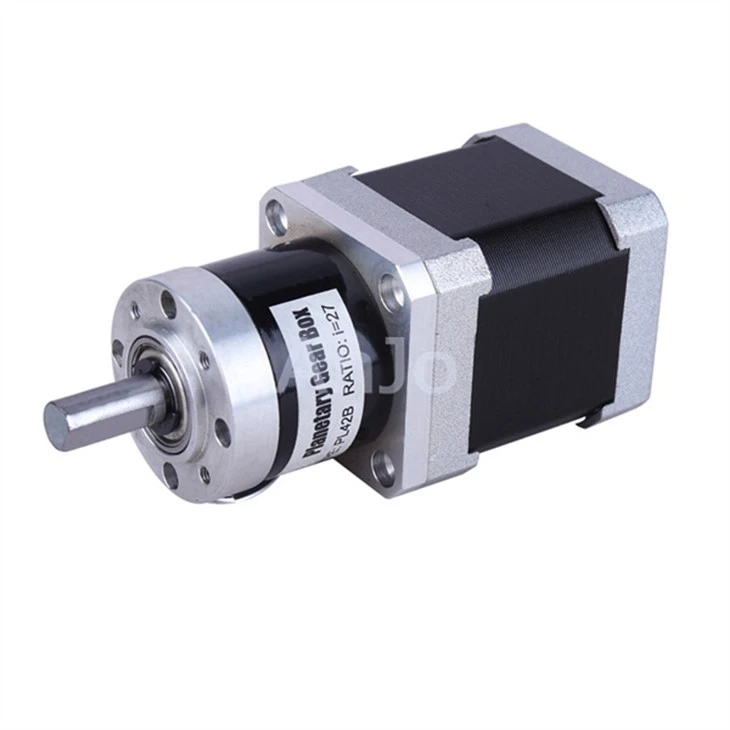

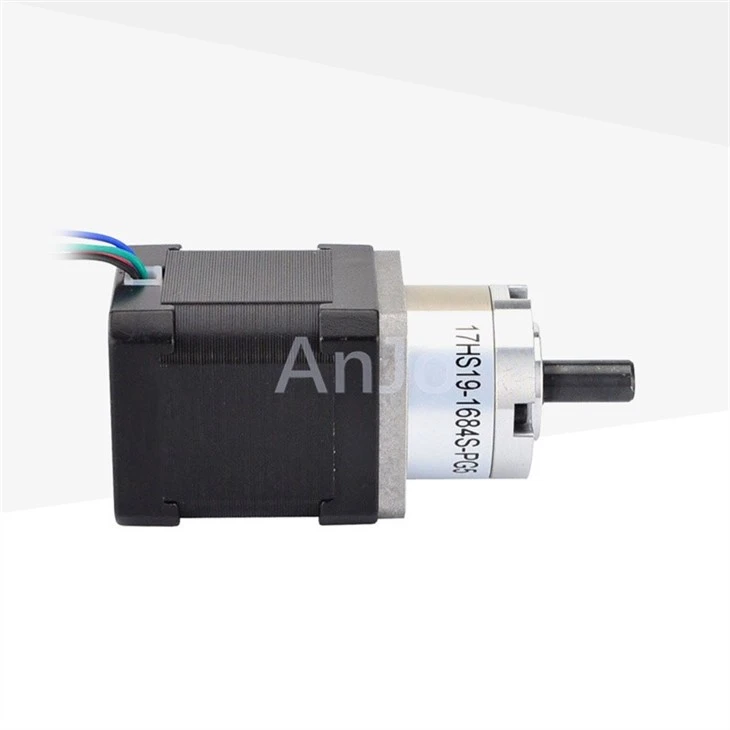
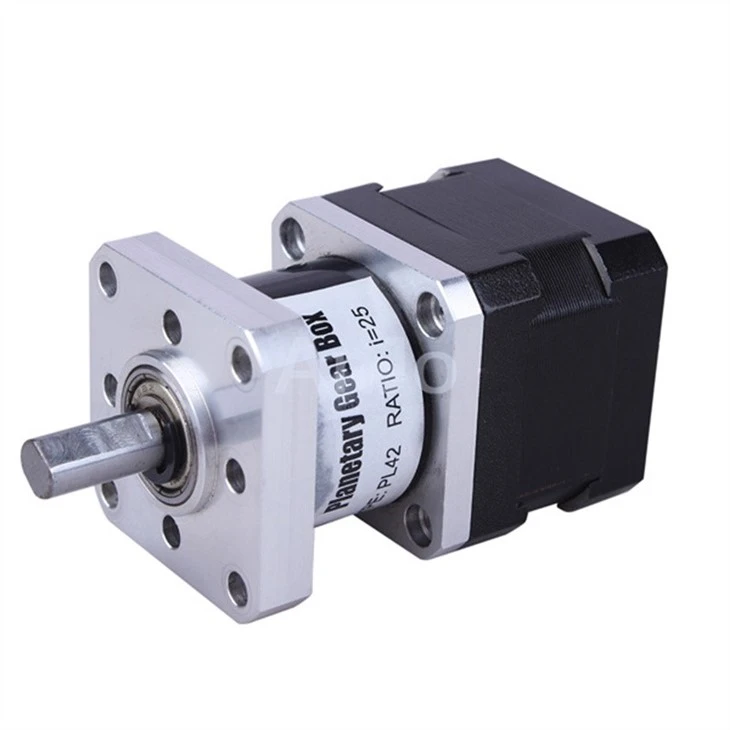
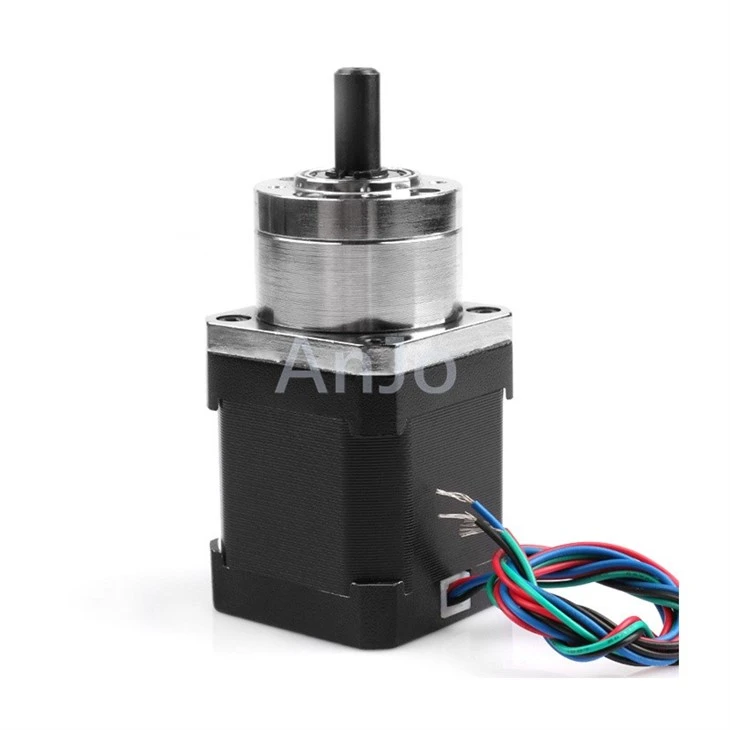
Stepper Motor And Gearbox
What is a Stepper Motor And Gearbox?
A Stepper Motor And Gearbox (also known as a stepper gear motor) is a motion control component that integrates a hybrid stepper motor with a precision gearhead. It achieves open-loop positioning via pulse signals, while the gear train serves to reduce speed and amplify output torque; simultaneously, it reduces the effective step angle, thereby enhancing positioning resolution.
Unlike modular setups where a gearbox is attached separately, these integrated units undergo coaxial alignment, backlash inspection, and break-in testing prior to shipment. This minimizes assembly errors, making them ideal for automated equipment that requires a compact footprint, low-speed operation, stable holding torque, and precise point-to-point control. Standard frame sizes include NEMA 8, 11, 14, 17, 23, and 34. Gear configurations-such as spur, planetary, or eccentric designs-are available with a wide range of gear ratios. Customization options for flanges, output shafts, and lead wire configurations are also supported.
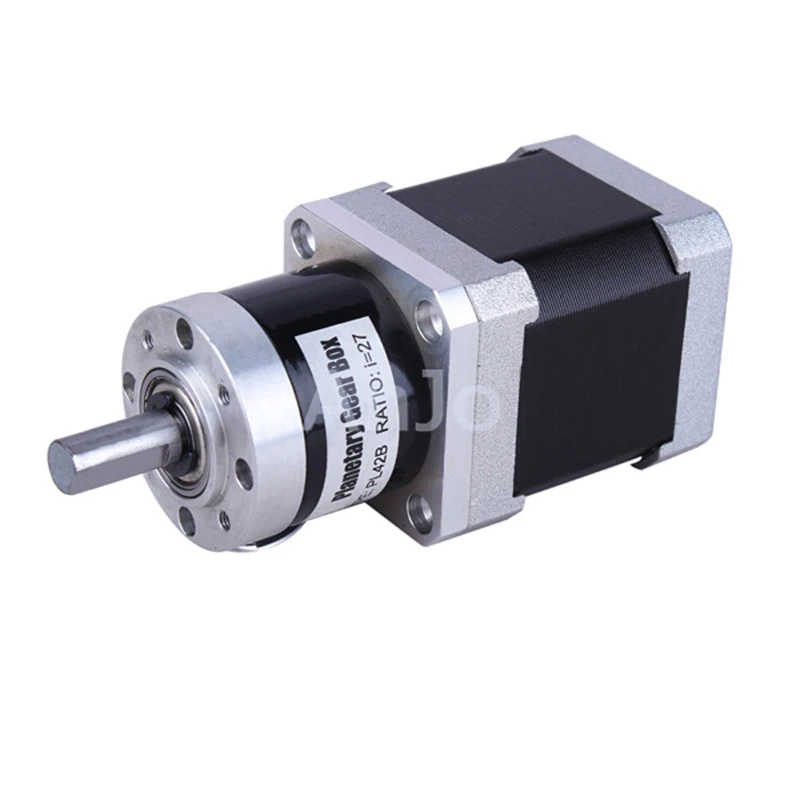
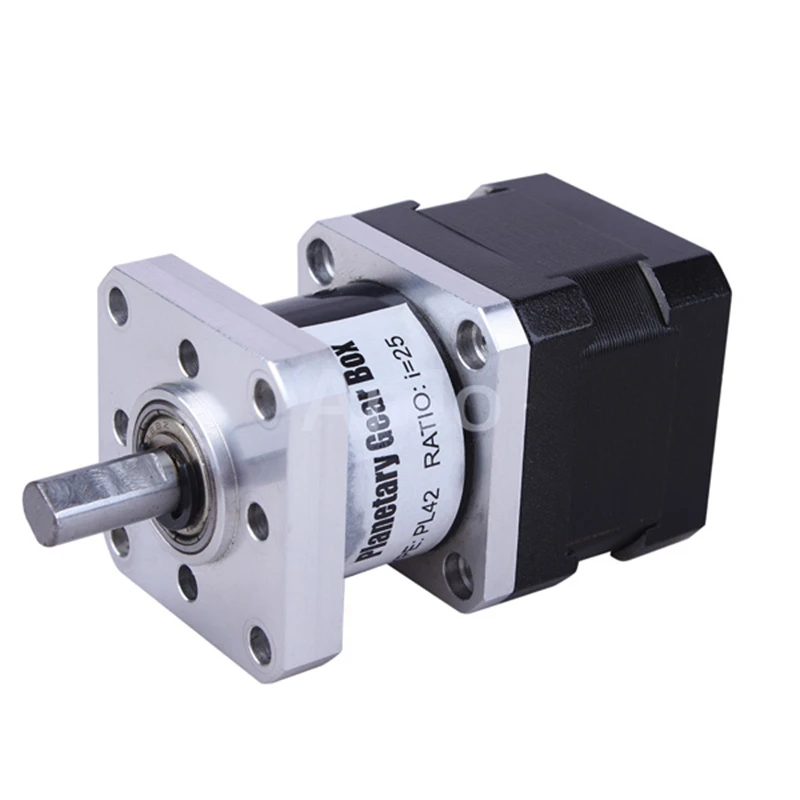
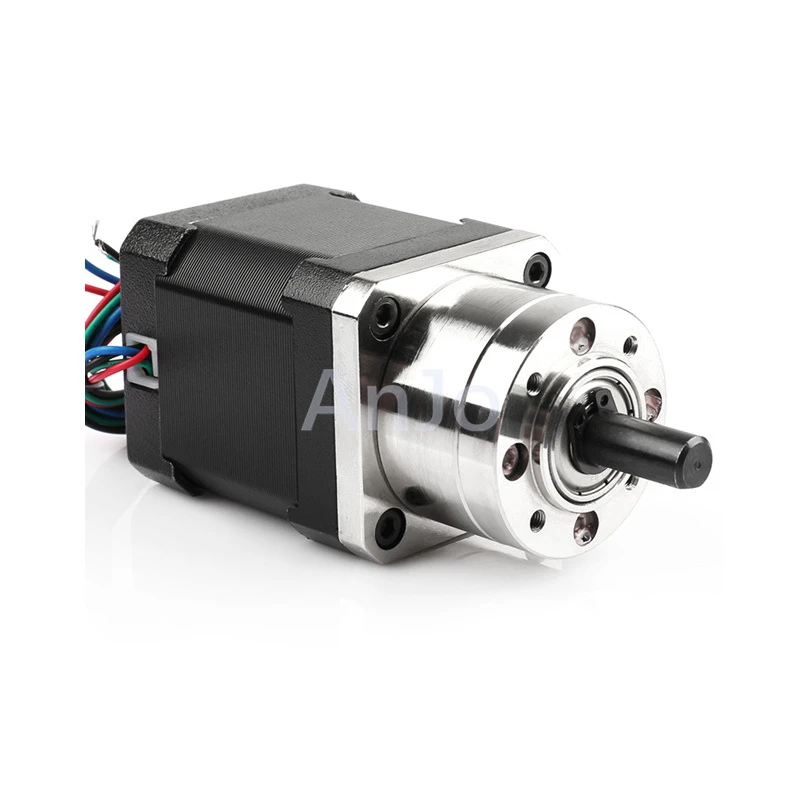

Torque Amplification: Overcoming the Limitations of Direct-Drive Stepper Motors
Standard stepper motors offer limited torque at low speeds, making them prone to "lost steps" when handling high-inertia loads. A gear mechanism amplifies output torque based on its reduction ratio, allowing smaller, more compact stepper motors to drive heavier loads. This reduces overall system costs while enabling the motor to operate within an optimal speed range, resulting in better thermal management.
Fine-Step Resolution for Enhanced Positioning Accuracy
With a native step angle of 1.8° (for two-phase hybrid stepper motors), the addition of a gear reducer effectively reduces the output shaft's step angle. When combined with micro-stepping drive technology, this enables micron-level positional adjustments-ideal for applications requiring high angular resolution.
Integrated Assembly: Simplifying On-Site Commissioning
Motors and gearboxes are pre-assembled and coaxially aligned at the factory. This eliminates the need for customers to source couplings or perform concentricity alignment, thereby reducing backlash, vibration, and noise-all while shortening assembly time on the production line.


* For more sizes, please contact our sales team


Q1: Can a stepper gear motor lose steps? What are the primary causes of step loss?
A1: Since it remains an open-loop stepper system, step loss can be triggered by factors such as overloading, excessive acceleration, inertial mismatch, or an insufficiently high current setting on the driver. While a gearbox can amplify torque, it cannot eliminate the risk of step loss. For applications requiring ultra-high reliability, it is recommended to incorporate an optical homing sensor (zero-position sensor) or upgrade to a closed-loop stepper gear motor.
Q2: Does a larger gear reduction ratio mean that torque increases infinitely?
A2: No. Gears have inherent limits in terms of mechanical strength, and there are losses due to transmission inefficiency. As the reduction ratio increases, both the allowable instantaneous torque and the maximum output speed decrease. Furthermore, units with high reduction ratios cannot withstand sudden, short-term load impacts; therefore, it is essential to verify the gear's rated torque specifications.
Q3: Does gear backlash affect positioning repeatability?
A3: Yes, it does. Backlash refers to the play (clearance) present when the direction of rotation reverses; it has minimal impact during continuous, unidirectional operation. However, for applications requiring frequent forward and reverse positioning, it is essential to select planetary gear units with low backlash. Standard spur gears typically have excessive backlash and are therefore unsuitable for precise bidirectional positioning.
Hot Tags: stepper motor and gearbox, China stepper motor and gearbox manufacturers, suppliers, factory
Previous
12 Volt Dc Worm Gear MotorYou Might Also Like


Send Inquiry