


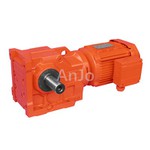


Industrial Reduction Gearbox
What is an Industrial Reduction Gearbox?
Industrial reduction gearboxes are core components of modern mechanical transmission systems, widely used in various industrial sectors such as mining, metallurgy, chemical engineering, logistics, construction machinery, and intelligent equipment. Their core function is to match motor speed with load requirements, reduce speed, increase output torque, while buffering transmission shocks, protecting power equipment, and ensuring long-term stable and low-loss operation of industrial equipment. In today's era of industrial automation upgrades, high-performance, low-noise, and highly durable reduction gearboxes have become crucial for the efficient operation of various heavy machinery.
How do industrial gearboxes work?
The core transmission principle of industrial gearboxes relies on gear meshing to convert speed into torque. Through the ratio and combination of multiple sets of large and small gears, the power input and output parameters are changed, perfectly adapting to the heavy-duty, low-speed, and high-torque operating requirements of industrial applications.
Simply put, the high-speed, low-torque power from the motor is transmitted to the gearbox through the input shaft. After multi-stage gear meshing, utilizing the mechanical principle of small gears driving large gears, the output speed is reduced, while the output torque is amplified according to the transmission ratio, offsetting the operating resistance of heavy-duty equipment. In addition, industrial gearboxes can optimize transmission accuracy, balance equipment operating load, isolate the direct impact between the motor and the load, effectively avoiding problems such as motor overload burnout and excessive wear of equipment parts, significantly extending the service life of the entire set of mechanical equipment.
The reduction ratio is commonly used in the industry as a core parameter to measure equipment performance. The larger the reduction ratio, the greater the speed reduction, the higher the output torque, and the more stringent the heavy-duty operating conditions. The reduction ratio matching under different operating conditions is also a core basis for selecting industrial gearboxes.


Types of Industrial Reduction Reducer


|
Model |
Stage |
Size |
Ratio |
Nominal Power (KW) |
Nominal Torque(N.m) |
Shaft |
Mounting |
|
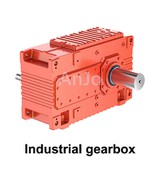
Industrial gearbox |
Single-stage |
3--19 |
1.25--5.6 |
30-4,744 |
2,200-165,300 |
S. Solid Shaft H. Hollow Shaft D.Hollow Shaft for Shrink Disk |
H:Horizontal V:Vertical M:Horizontal Design Without Feet |
|
Double-stage |
4--26 |
6.3--28 |
21-5,193 |
5,900-843,000 |
|||
|
Three-Stage |
5--26 |
22.4--112 |
9-4,749 |
10,600-952,000 |
|||
|
Four-Stage |
7--26 |
100--450 |
4.1-1,325 |
18,400-944,000 |

|
Model |
Industrial Gearbox |
|
Input type |
Flange, shaft |
|
Output type |
Solid shaft, hollow shaft, shrink disk, splined shaft, flange, etc |
|
Optional |
Fan, oil pump, oil tank, back stop, cooling systems, etc |
|
Housing material |
HT250 |
|
Gear material |
Alloy steel |
|
Warranty |
12 month |


For more types and sizes, please contact our sales staff.


As a core component of industrial transmission, industrial reduction gearboxes cover almost all industrial sectors. Different models are precisely adapted to specific scenarios, making them essential equipment for industrial automation and heavy industrial production.
1. Logistics and Conveying Industry: Belt conveyors, roller conveyors, elevators, and other equipment are equipped with helical gear reducers to achieve smooth conveying and stable start-stop, adapting to the continuous operation requirements of assembly lines.
2. Heavy Industry and Mining Industry: Crushers, screening equipment, mine winches, and metallurgical rolling mill equipment are equipped with bevel gears and heavy-duty helical gear reducers to withstand heavy loads and impacts, ensuring stable operation of heavy equipment.
3. Automation and Intelligent Equipment Industry: Servo robots, CNC equipment, and precision transmission devices are equipped with planetary gear reducers to meet the transmission requirements of high precision, high response, and low error.
4. Chemical and Environmental Protection Industry: Mixing equipment, sewage treatment equipment, and dust removal equipment are equipped with worm gears and helical gear reducers, suitable for humid, corrosive, and continuous operating conditions.
5. Lifting and hoisting industry: Hoists, lifting platforms and lifting machines are equipped with worm gear reducers with self-locking function to prevent load slippage and ensure operational safety.



Q1: How often should the lubricating oil in an industrial gearbox be changed?
A1: Under normal continuous operation conditions, change the lubricating oil every 3-6 months. Under harsh conditions such as dust, high temperature, and humidity, change it every 1-3 months. For equipment that is not in use, change the lubricating oil annually to prevent it from deteriorating and becoming ineffective.
Q2: How to solve the problem of excessive noise from a reduction gearbox?
A2: First, check if the lubricating oil is sufficient and whether it has deteriorated, and clean any impurities from the gears. Second, check for bearing wear and gear meshing misalignment, and replace worn parts. Finally, confirm whether it is operating under overload conditions, and adjust the load parameters to effectively reduce operating noise.
Q3: Can industrial gearboxes be used under overload conditions?
A3: Prolonged overload is not recommended. Short-term, slight overloads may be manageable in emergencies, but prolonged overload can lead to gear pitting, bearing overheating, oil seal leaks, and gearbox deformation, significantly shortening equipment lifespan. In severe cases, it can directly damage gears and cause equipment downtime. For heavy-load, impact-based applications, it is recommended to select a model one size larger.
|
|
|
|
|
|
|
|
|
|
|
|
|
|
|
|
|
|
|
|
|
|
|
|
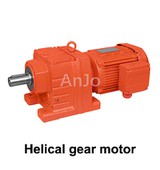

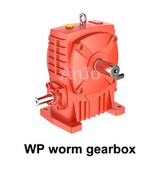


Hot Tags: industrial reduction gearbox, China industrial reduction gearbox manufacturers, suppliers, factory, Coaxial Helical Gearbox, Helical Bevel Reducer, Helical Type Gearbox, Industrial Gear Reducer, Large Industrial Gearboxes, Parallel Shaft Helical Gearbox
Previous
Industrial GearboxYou Might Also Like


Send Inquiry