


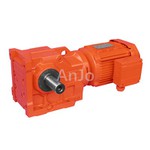
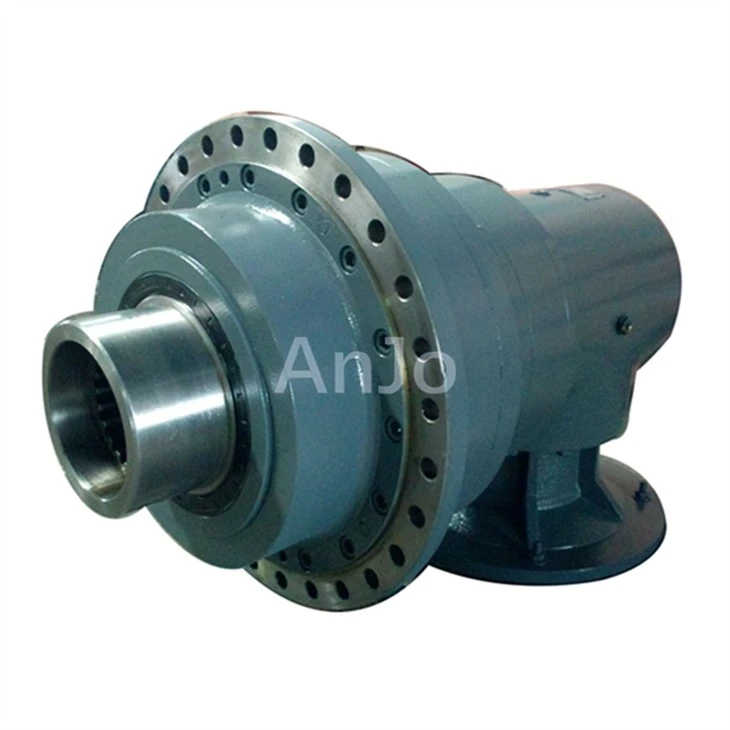

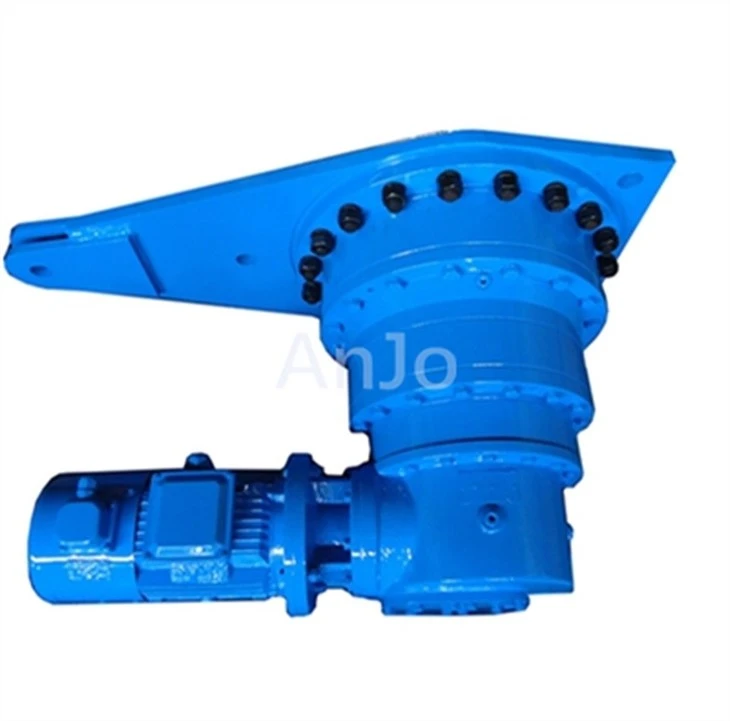
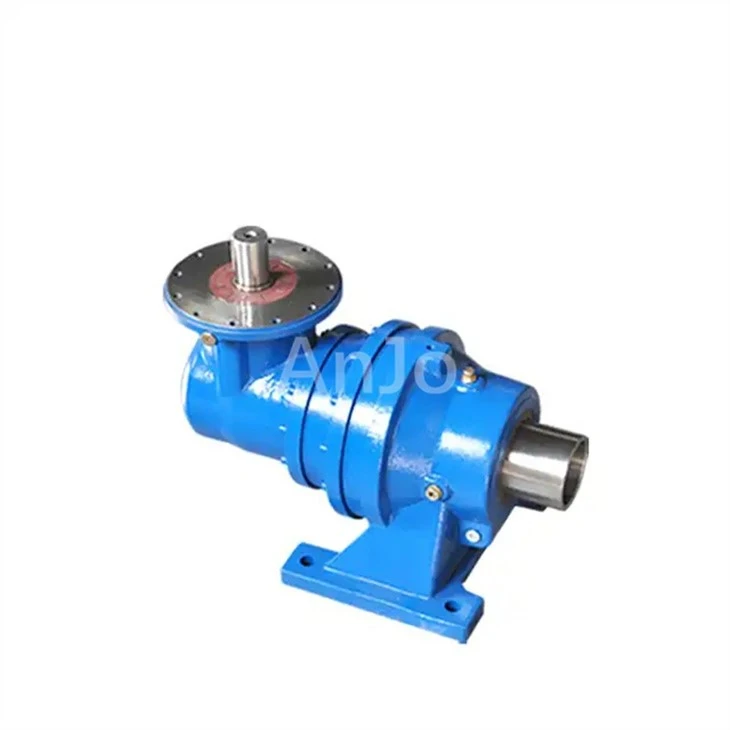
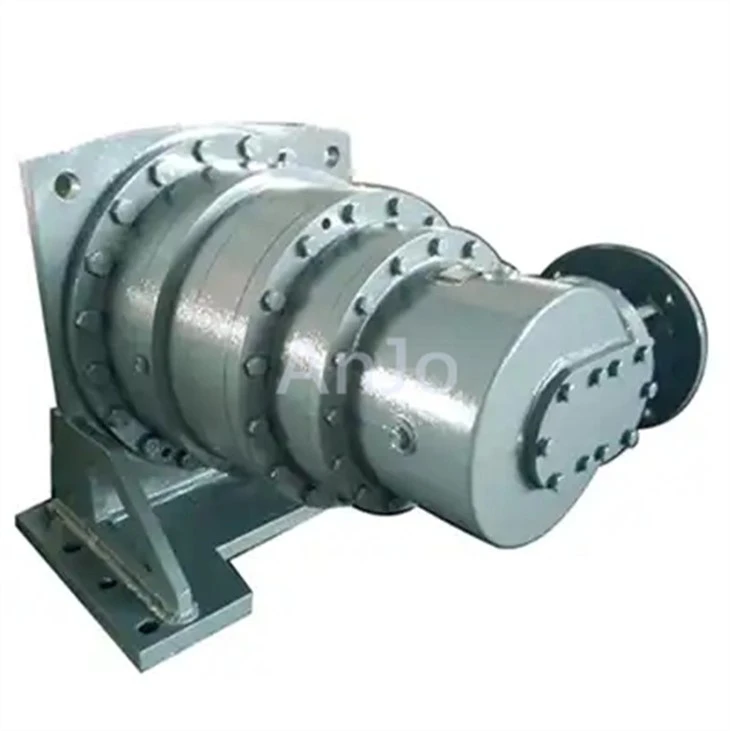
Compound Planetary Gearbox
What is a Compound Planetary Gearbox?
Compound planetary gearboxes-also known as multi-stage series planetary reducers-consist of two or more independent planetary gear sets arranged in series. The output from the planet carrier of one stage serves as the input for the sun gear of the subsequent stage. By stacking multiple gear sets, these units achieve high gear reduction ratios and significant torque amplification-a design that differs from single-stage planetary, fixed-axis, or worm-gear transmission systems.
Standard single-stage planetary gearboxes have limited reduction ratios; achieving low-speed, high-torque output typically requires the addition of external fixed-axis gear sets, which significantly increases the overall size of the assembly. In contrast, compound planetary systems perform multi-stage reduction within a coaxial structure, enabling higher gear ratios and greater power density within a compact installation space.
This series of compound planetary gearboxes features hardened, ground-finished gears and a floating load-equalization mechanism. Available in two-stage or three-stage configurations, they are compatible with various drive sources, including servo motors, asynchronous motors, DC motors, and hydraulic motors. They support multiple output interfaces-such as flanges, splines, and hollow shafts-and are designed to handle both high-precision positioning tasks and continuous, heavy-load transmission applications.
Models


Types: P2N,P2L,P2S,P2K,P3N,P3S,P3K
Features
- Coaxial compound configuration for a compact footprint at high gear ratios
Multiple planetary gear stages are arranged in series along a common axis, eliminating the need for redirection gears and resulting in a significantly smaller axial dimension compared to multi-stage fixed-axis gearboxes. This design maintains high power density across a broad gear ratio range-from 10:1 to 1000:1-making it ideal for integrated applications where internal space is limited. - Multi-planetary load-sharing design ensures stable load-bearing capacity.
In each planetary stage, the load is distributed among 3 to 4 planetary gears. A floating sun gear structure mitigates uneven loading and facilitates stress dispersion under impact loads. With ample margin for short-term peak torque, this design is well-suited for industrial applications characterized by frequent start-stop cycles and significant load fluctuations. - Precision-ground, hard-faced gears for extended fatigue life.
The gears undergo a carburizing and quenching process followed by precision grinding, achieving an accuracy level of ISO 6–7. The high surface hardness ensures minimal wear; under S1 continuous duty, the transmission noise and backlash variation remain well-controlled during long-term operation.
Products Description
|
Model |
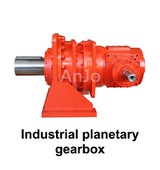
Industrial Planetary Gearbox |
|
Ratio |
2 stage: 25~560 3 stage: 140~4000 |
|
Permitted Torqne |
up to 1920000n.M |
|
Input Power |
0.4~9551kw |
|
Output speed |
5.86~1000rpm |
|
Mounting Type |
Horizontal, Vertical |
|
Stage |
1, 2, 3 |
|
Input Speed |
1500, 1000, 750rpm |
|
Output Speed |
0.19~60rpm |
Specifications


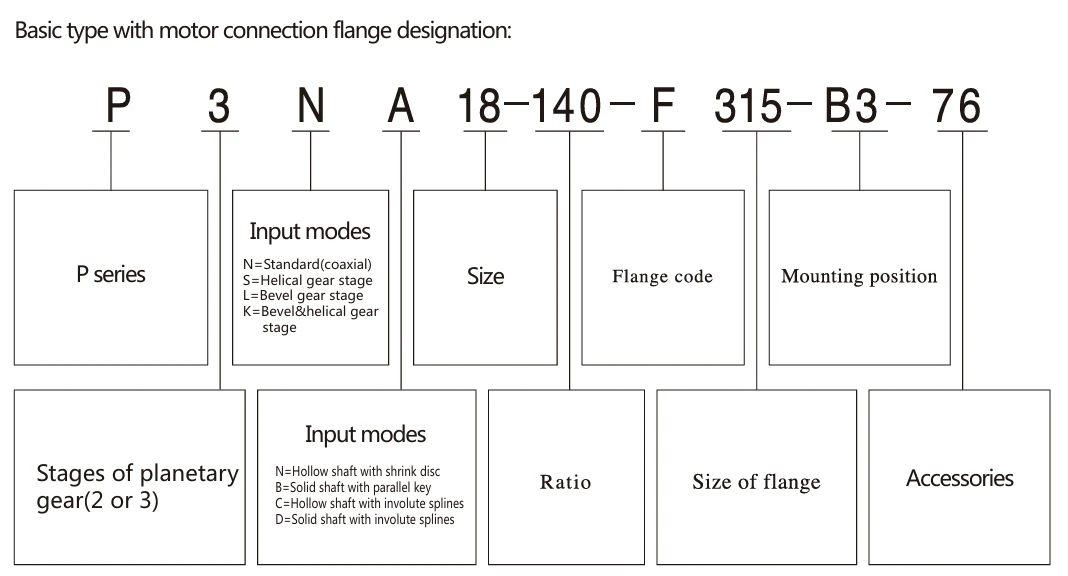

Our advantages


Company Profile


Product Range:
Gear reducers, worm gear reducers, and electric motors, etc.
Core Advantages
Customized production, extensive export experience;
Service Scope:
Integrated product export, technical support, and after-sales guarantee.

FAQ
Q1: Does a higher gear ratio always result in higher output torque?
A1: No. While a gear ratio amplifies torque, it is constrained by the gear's own rated load capacity. If the load exceeds this limit, the gear tooth surfaces will sustain damage, regardless of how high the gear ratio is. Therefore, when selecting a gearbox, it is essential to verify its rated torque capacity.
Q2: Can a compound planetary gearbox be back-driven?
A: Most standard compound planetary configurations allow for back-driving, but they possess weak self-locking capabilities. In applications involving vertical lifting or gravity-based loads, the gearbox cannot be relied upon to self-lock; therefore, a brake must be incorporated into the system.
Q3: What is the function of a locking assembly (locking disc) in a hollow-shaft output compound planetary gearbox?
A3: A locking assembly creates a keyless connection through clamping force. It offers convenient installation and removal, as well as high positioning accuracy. It also prevents the deformation of keyways-a common issue with standard parallel keys subjected to the stress of frequent forward and reverse rotation-making it ideal for rotary tooling that requires frequent changes in rotational direction.
|
|
|
|
|
|
|
|
|
|
|
|
|
|
|
|
|
|
|
|
|
|
|
|



Hot Tags: compound planetary gearbox, China compound planetary gearbox manufacturers, suppliers, factory
Previous
2 Phase Stepper MotorYou Might Also Like


Send Inquiry