


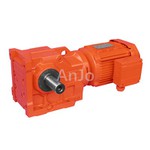


Low Voltage Induction Motor
What is an Low Voltage Induction Motor?
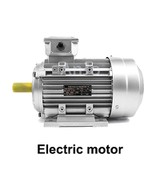
Low-voltage induction motors-typically rated at ≤1000V and featuring a three-phase squirrel-cage rotor-operate on the principle of electromagnetic induction to convert electrical energy into mechanical energy. They serve as highly versatile, fundamental power units for industrial drive applications. These motors utilize a totally enclosed, self-cooled design with a cast-iron frame, and their stator windings undergo a vacuum-impregnation process. They offer stable operation, are free from brush-related wear, and support both direct-on-line (DOL) starting and variable-frequency drive (VFD) speed control. Unlike precision-positioning motors such as servo or stepper motors, these induction motors are designed for long-term, continuous, constant-torque output. They are available in various energy-efficiency classes (IE2, IE3, and IE4) and adhere to international IEC standards for mounting dimensions-supporting B3 (foot-mounted), B5 (flange-mounted), and B35 (foot-and-flange mounted) configurations. They can be integrated with gearboxes, fans, or pumps, making them ideal for continuous-duty applications such as factory assembly lines, water treatment systems, HVAC, and auxiliary mining equipment. Furthermore, they serve as direct, like-for-like replacements for equivalent low-voltage induction motors from international brands.
Models


Features
1. Robust and Durable Construction for Reliable Continuous Operation
The squirrel-cage rotor eliminates vulnerable the need for commutators or similar wear-prone components, while the design offers high resistance to short-term overloads. The cast-iron housing undergoes an aging process to relieve internal stress, ensuring low vibration. The motor is suitable for S1 continuous duty, requiring minimal maintenance.
2. Multiple Energy-Efficiency Options to Meet Conservation Standards
Available in high-efficiency versions (IE2, IE3, and IE4), these motors comply with energy-efficiency regulations in China, the European Union, Southeast Asia, and other regions, helping to significantly reduce electricity costs during long-term operation.
3. Flexible Control: Direct-on-Line (DOL) or Variable Frequency Drive (VFD) Operation
The motor supports both direct-on-line starting via a three-phase power supply and variable-speed control using a VFD. This versatility makes it compatible with a wide range of drive applications, including fans, pumps, and conveying equipment.
Products Description
|
Model |
0.09~355kW Motor |
|
Frame |
56~355 |
|
Power |
0.09~355kW |
|
Speed |
3000rpm, 1500rpm, 1000rpm |
|
Voltage |
220/380V, 230/400V, 400/690V, or customization |
|
Frequency |
50HZ/60HZ |
|
Efficiency |
IE1, IE2, IE3, IE4 |
|
Cooling |
Fan |
|
Protection |
IP44/IP54/IP55 |
|
Housing |
Aluminum/Cast Iron |
|
Ambient temperature |
-15℃≤0℃≤40℃ |
|
Altitude |
No exceeding 1000 meters |
|
Duty |
S1 |
Drawings


Installation position

Our advantages

Production


Application


Company Profile


FAQ
Q: What is the dividing line between low-voltage induction motors and high-voltage motors?
A: The industry-standard threshold is an AC rated voltage of 1000V. Motors with a rated voltage of 1000V or less are classified as low-voltage induction motors, while those exceeding this voltage are considered high-voltage motors. These two categories differ significantly in terms of power supply, insulation, and operation and maintenance requirements.
Q: Can the speed of a low-voltage induction motor be adjusted downward indefinitely using a variable-frequency drive (VFD)?
A: No. For motors with self-cooling fans, heat dissipation deteriorates at low frequencies; therefore, long-term operation below 20 Hz is generally not recommended. If the motor must run at low speeds for extended periods, an independent cooling fan must be installed.
Q: Can a low-voltage squirrel-cage induction motor be started directly under a heavy load?
A: For low-power, light-load applications, direct-on-line (DOL) starting is acceptable. For high-power applications or loads with high inertia, direct starting results in a high inrush current; therefore, a soft starter or a star-delta starter is recommended.
|
|
|
|
|
|
|
|
|
|
|
|
|
|
|
|
|
|
|
|
|
|
|
|



Hot Tags: low voltage induction motor, China low voltage induction motor manufacturers, suppliers, factory
Previous
NMRV Worm Gear ReducerNext
57 Stepper MotorYou Might Also Like


Send Inquiry