


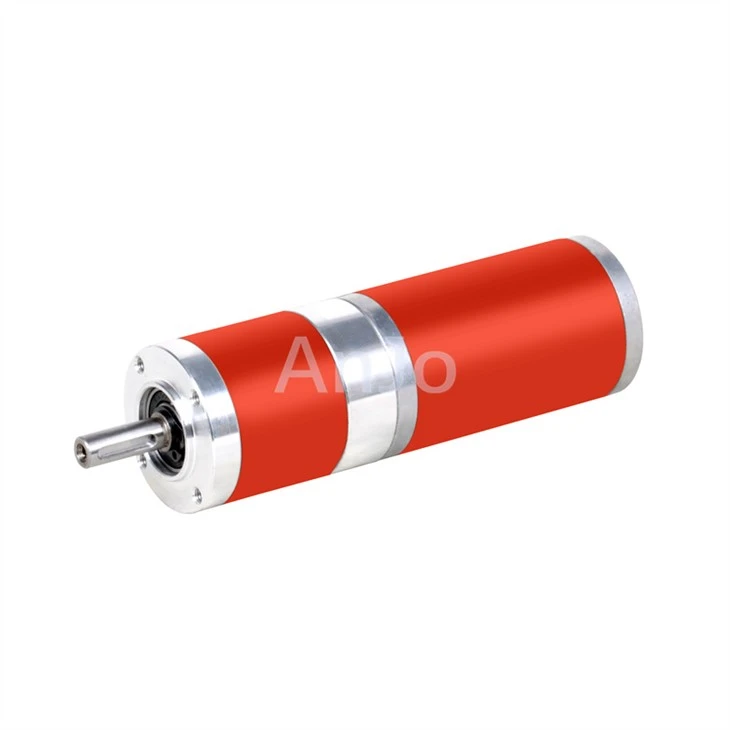
Planetary Motor Gearbox
DC planetary gear motors are integrated low-voltage power units combining a brushed DC motor with a planetary gearbox; brushless DC planetary gear motors pair a brushless DC motor with a planetary reduction mechanism. Both types utilize a planetary gear torque-splitting structure to deliver high torque at low speeds within compact installation spaces. These motors typically operate on low-voltage power (12V/24V/48V) and support battery operation, making them suitable for mobile devices, portable equipment, and autonomous, independently powered automation units.

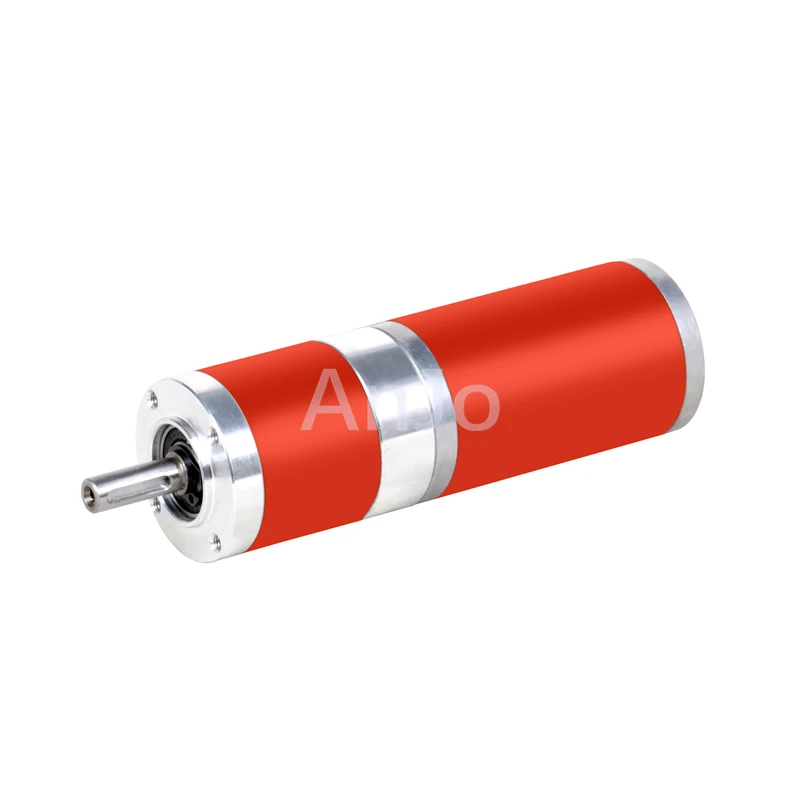
1. DC Planetary Gear Motor (Brushed)
Advantages: Simple control, low drive costs, high starting torque, and rapid startup response; requires only a simple controller rather than a complex brushless driver. Suitable for equipment requiring intermittent operation, moderate-to-short service life, and cost-effective solutions.
Limitations: Carbon brushes are subject to mechanical wear, generating carbon dust during prolonged continuous operation; relatively short continuous service life; slightly higher noise levels at high speeds.
2. Brushless DC Planetary Gear Motor (BLDC Planetary)
Advantages: Brushless design eliminates dust generation and supports long-term continuous operation, offering a service life 5–10 times longer than brushed models; lower heat generation, smoother operation, and minimal electromagnetic interference; excellent speed control linearity, making it ideal for high-precision, continuous operation scenarios.
Limitations: Requires a compatible brushless driver, resulting in higher overall system costs and more complex control logic compared to brushed motors.

- Compact coaxial design offering high torque in a small footprint.
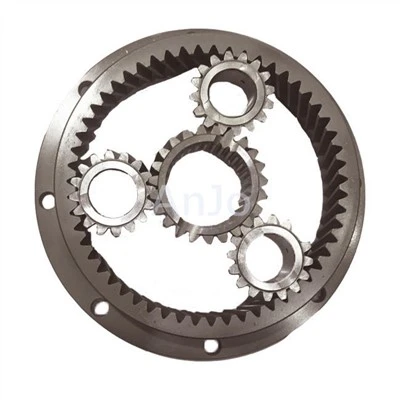
Utilizes a sun gear and multiple planet gears to distribute the load, resulting in a significantly smaller size compared to worm-gear or parallel-axis DC gear motors of equivalent power. Ideal for space-constrained applications such as AGV chassis, mobile robots, and compact automation modules, delivering stable, high-torque output from 12V/24V low-voltage inputs. - Wide voltage compatibility and battery power support
Compatible with standard 12V, 24V, and 48V systems-including those with voltage fluctuations-it supports both lithium and lead-acid battery power sources. Free from the constraints of industrial AC power grids, it is the preferred power solution for mobile automation equipment. - Multiple gear ratios available with flexible speed adjustment.
Features single-, two-, and three-stage planetary gear configurations, with selectable reduction ratios ranging from 3:1 to 1000:1. Output speeds can be matched to specific customer requirements, and the system supports the addition of functional modules such as brakes, encoders, and Hall effect feedback.


Q1: Should I choose a DC planetary gear motor or a brushless DC planetary gear motor?
A1: For applications involving intermittent operation, limited budgets, and no requirement for long-term continuous running, a DC planetary gear motor (brushed) is the choice. For scenarios requiring 24-hour continuous operation, low dust generation, long service life, and low electromagnetic interference, a brushless DC planetary gear motor is preferable. Note that brushless solutions require a matching driver, resulting in a higher overall cost.
Q2: Can a brushless DC planetary gear motor be equipped with an encoder for positioning control?
A2: Yes. We can integrate Hall sensors or incremental encoders; when paired with a brushless motor driver, this enables closed-loop speed control and position control. Encoder-based solutions are suitable for applications requiring precise position feedback, such as AGV drive systems and rotary workstations.
Q3: Can DC planetary gear motors withstand short-term overloads?
A3: They can withstand short-term peak overloads (typically 1.5 to 2 times the rated torque for a few seconds), such as those encountered when starting up against shock loads. However, prolonged continuous overloading is not recommended, as it accelerates gear wear and causes motor overheating, thereby shortening the unit's service life. It is advisable to include a safety margin for torque when selecting a model.
|
|
|
|
|
|
|
|
|
|
|
|
|
|
|
|
|
|
|
|
|
|
|
|



Hot Tags: planetary motor gearbox, China planetary motor gearbox manufacturers, suppliers, factory
Previous
NMRV Worm Gear ReducerYou Might Also Like


Send Inquiry