


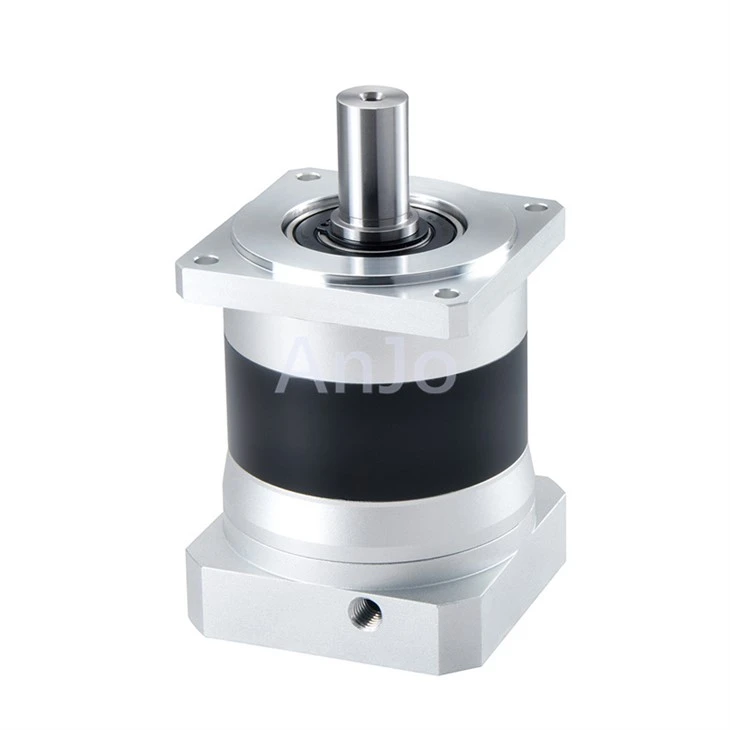

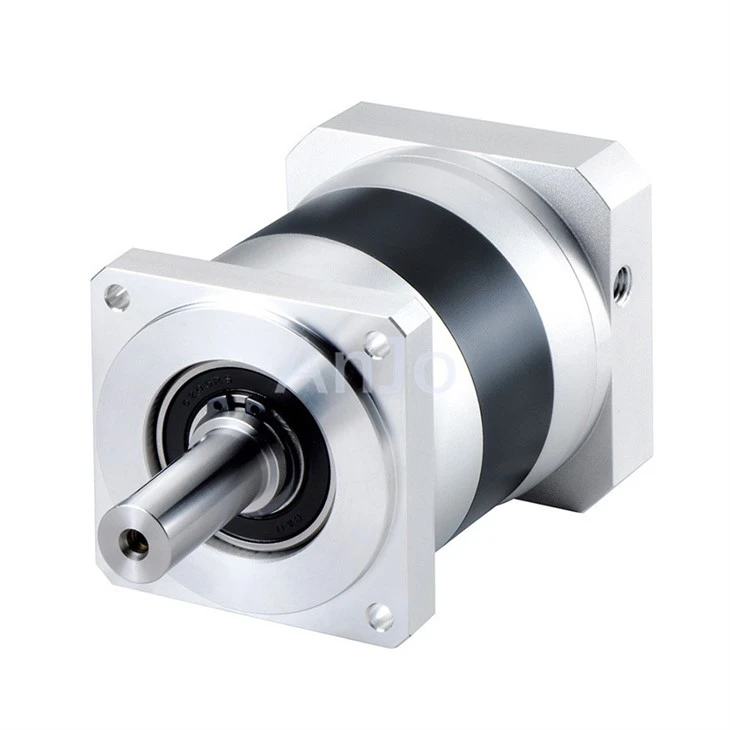
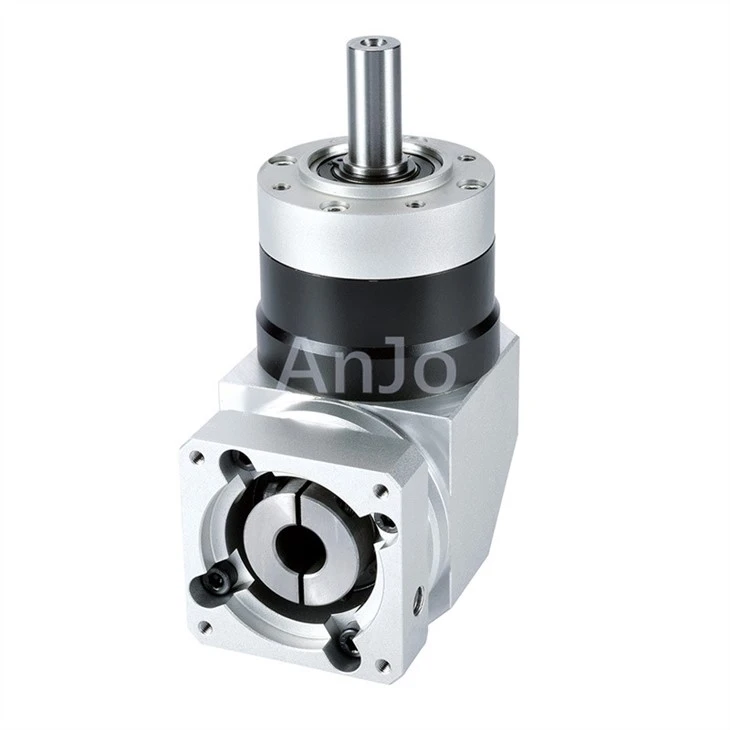
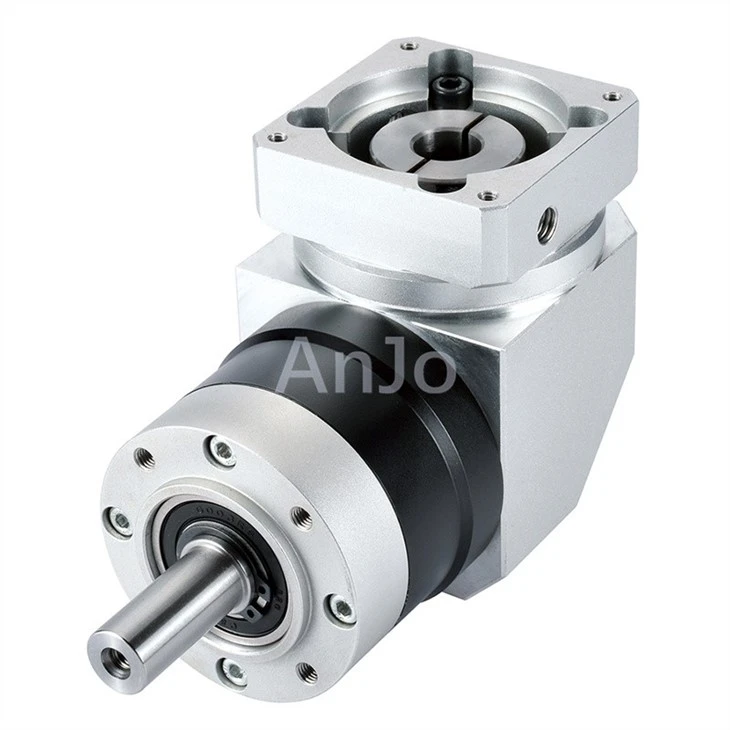
2 Stage Planetary Gearbox
What is a 2 Stage Planetary Gearbox?
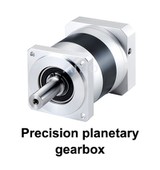
This two-stage precision planetary gearbox consists of two planetary gear units connected in series, forming a coaxial planetary reduction structure. Power enters through the input sun gear, undergoes a first stage of reduction via the first-stage planetary gears and the internal ring gear, and then passes to the second-stage planetary mechanism for further reduction and torque amplification. Compared to single-stage planetary gearboxes, this two-stage design achieves a higher reduction ratio while maintaining a compact, coaxial form factor. Furthermore, it offers a smaller radial footprint and superior positioning accuracy when compared to multi-stage helical gear reducers.
Designed for use with servo motors and closed-loop stepper motors, the gears are crafted from alloy steel that has undergone carburizing and quenching. Options include standard or low-backlash versions, with configurations available for either flange or shaft output. The unit supports direct connection to various brands of servo motors and is widely utilized in automated systems that require precise positioning and stable torque output.



1. Two-stage series reduction with a wide range of gear ratios
A single-stage planetary gearbox typically offers a gear ratio of 3–10, while a two-stage version provides a range of 12–100. This allows for high gear ratios within a compact, coaxial design, effectively amplifying output torque to complement the high-speed, low-torque characteristics of servo motors.
2. Coaxial configuration for space-efficient installation
With the input and output shafts aligned on the same axis and a cylindrical overall profile, the unit does not require additional lateral space. This makes it ideal for automated systems with restricted installation areas, such as linear slides or rotary indexing stations.
3. Load sharing among multiple planetary gears for stable load-bearing capacity
Each stage utilizes multiple planetary gears that mesh simultaneously, distributing the load evenly. Compared to conventional fixed-axis gear transmissions, this design offers superior fatigue resistance, smoother operation, and reduced vibration.
4. Modular interfaces compatible with mainstream servo and closed-loop stepper motors
Standardized flange interfaces allow for direct mounting to a wide variety of servo motors. Output options-including keyed shafts, flange outputs, and splined shafts-facilitate easy integration with components such as couplings, lead screws, and rotary tables.

|
Model |
40~160
|
|
Ratio |
3~516 |
|
Input speed |
1500rpm, 2000rpm, 3000rpm |
|
Noise |
≤65dB
|
|
Efficiency |
Single level ≥98%, double level ≥96%, three level ≥94% |
|
Housing Material |
Aluminum |
| Protection | IP65 |
| Operating temperature |
-20℃~+90℃
|
|
Warranty |
1 year |








Q1: Is the direction of rotation the same for the input and output of a two-stage planetary gearbox?
A1: In a standard coaxial two-stage planetary gearbox, the input and output rotate in the same direction; the same applies to a single-stage planetary gearbox.
Q2: Can a planetary gearbox operate with frequent forward and reverse rotation?
A2: Yes, it can. However, frequent reversals will generate impact loads; therefore, you should increase the safety factor during the selection process. Additionally, prioritize models with precision-ground gears to reduce the rate of wear.
Q3: Why is the efficiency of a two-stage planetary gearbox lower than that of a single-stage one?
A3: Each pair of meshing gears incurs energy loss. In a two-stage system, these losses are cumulative; generally, the higher the gear reduction ratio, the lower the efficiency.
|
|
|
|
|
|
|
|
|
|
|
|
|
|
|
|
|
|
|
|
|
|
|
|



Hot Tags: 2 stage planetary gearbox, China 2 stage planetary gearbox manufacturers, suppliers, factory
Previous
Planetary Drive GearboxYou Might Also Like



Send Inquiry