


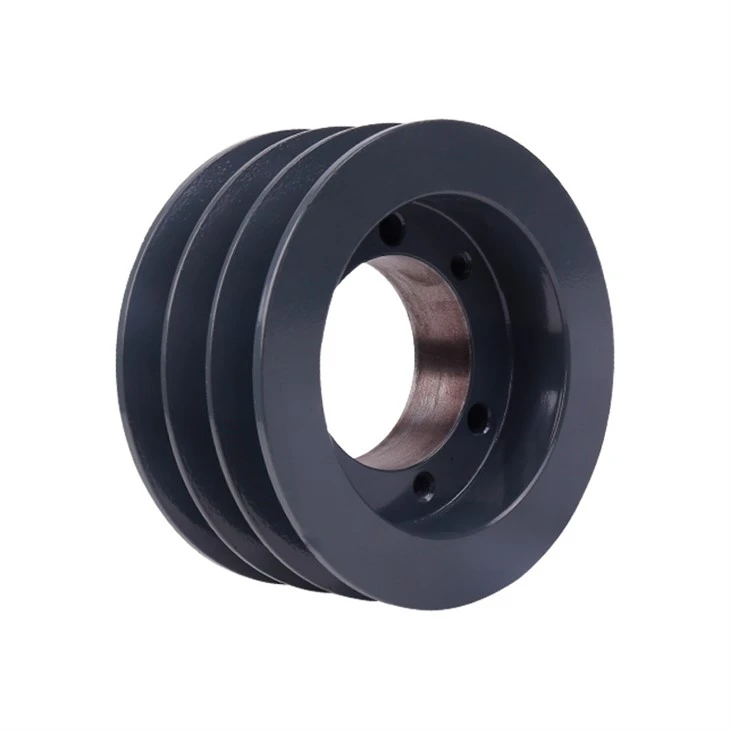

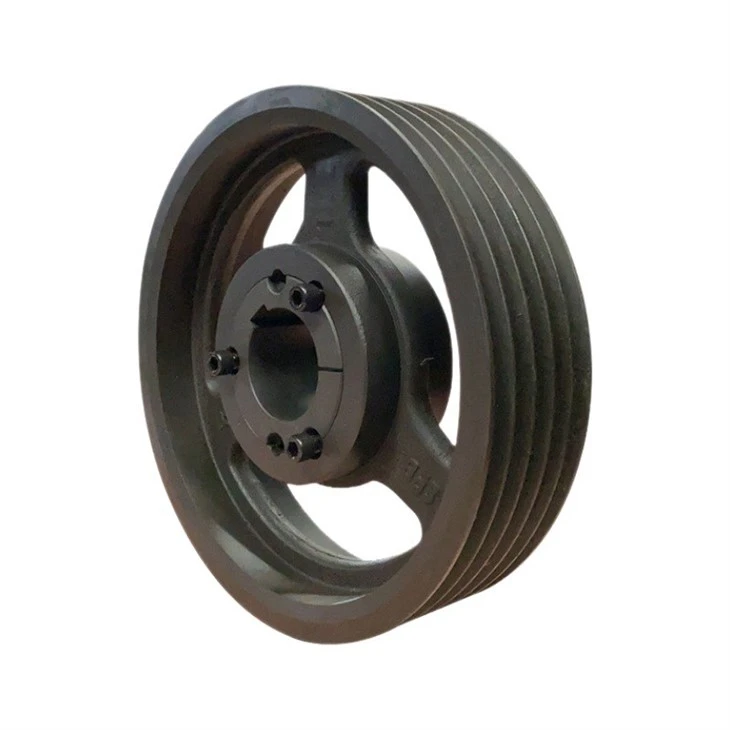
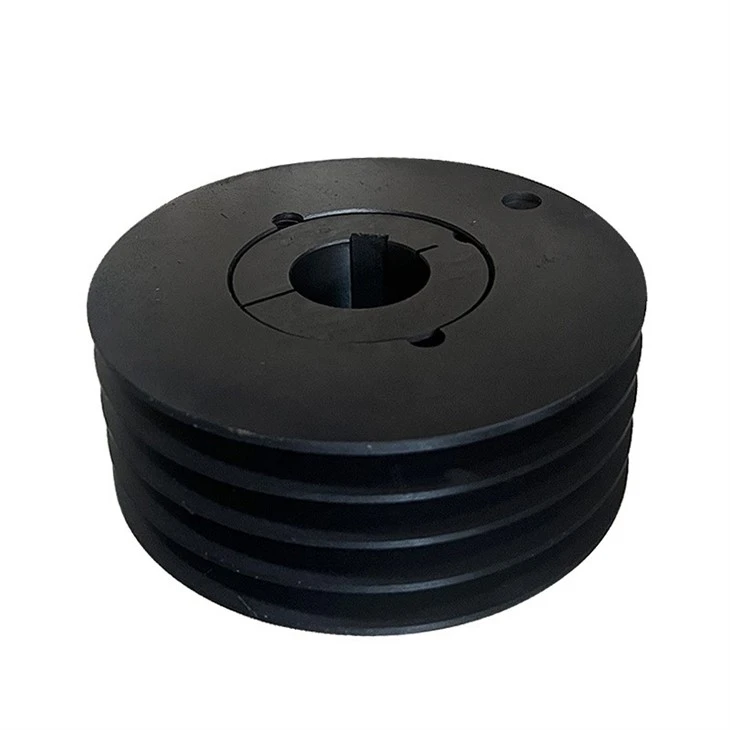
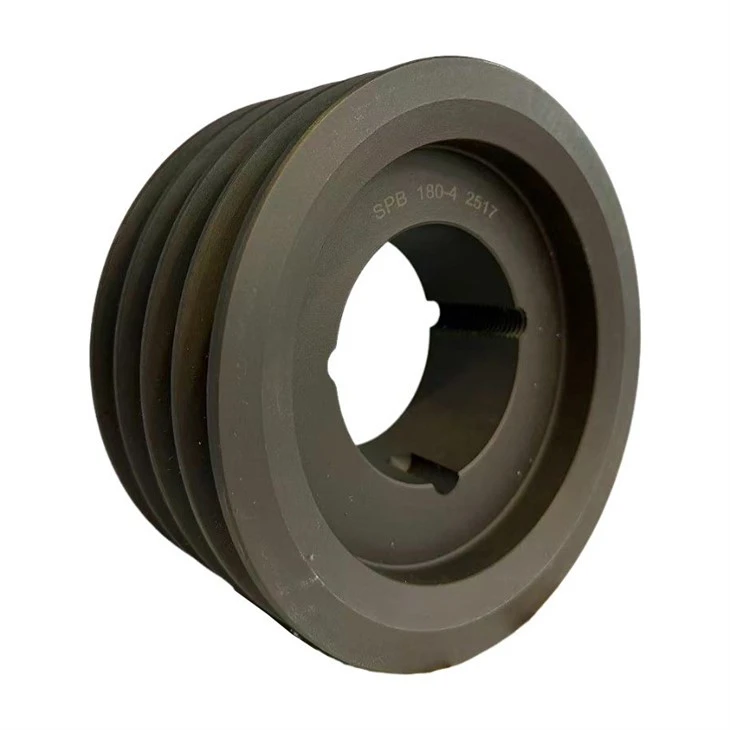
Belt Drive Pulley
What is the Belt Drive Pulley?
Belt drive pulleys are fundamental components of industrial drive systems. Through the frictional engagement between the belt and the pulley body, they facilitate power transmission, speed regulation, and torque distribution among motors, gear reducers, and machinery. They are widely used across diverse sectors, including general machinery, automation equipment, conveying systems, light and heavy industries, agricultural machinery, and home appliances. Compared to gear or chain drives, belt drive pulleys offer key advantages such as low operating noise, shock absorption, ease of installation, low maintenance costs, and the capability for long-distance power transmission, making them a preferred choice for lightweight and quiet industrial drive solutions.
Models


Types of Belt Drive Pulley
1. Timing Pulleys (Toothed Drive)
Utilizing a toothed meshing drive mechanism, the pulley grooves engage precisely with the timing belt, eliminating slippage and ensuring transmission efficiency exceeding 98% with a constant, accurate speed ratio. Ideal for high-precision automation equipment, CNC machine tools, precision conveyor lines, and intelligent robots where transmission accuracy and synchronization are critical. Available in a full range of tooth profiles-including MXL, XL, L, H, T2.5, T5, T10, AT5, and AT10-offered as both custom solutions and off-the-shelf stock.
2. V-Belt Pulleys (Friction Drive)
Compatible with standard A, B, C, D, and E-type V-belts, these pulleys rely on friction against the belt's sidewalls to transmit power. They offer high torque capacity and robust overload resistance, making them suitable for heavy-duty industrial applications involving high loads and significant vibration. Primarily used in general-purpose heavy machinery such as fans, pumps, air compressors, crushers, and agricultural equipment. Customization is available for single, double, and multi-groove configurations; pulleys undergo dynamic balancing to eliminate vibration during high-speed operation.
3. Flat Belt Pulleys (Flat Surface Friction Drive)
Featuring a smooth, flat surface, these pulleys are designed for flat belts and high-speed endless belts. They excel in high-speed, low-noise, and lightweight transmission applications, offering a simple structure that is easy to install and remove. Commonly used in light industrial equipment, textile machinery, small-scale conveyors, and office automation equipment-scenarios characterized by low loads and high rotational speeds. Surface treatments such as polishing and scratch/wear-resistant coatings are available to extend belt service life.
Features
- Premium Materials, Rugged Durability: Standard models are precision-forged from HT200 gray cast iron and 45# steel, while high-end precision models utilize 6061 aluminum alloy; these materials offer uniform density, high compressive strength, wear resistance, and dimensional stability. Cast iron models suit heavy-duty, high-load applications; steel models offer superior impact resistance; and aluminum alloy models provide lightweight performance and rapid heat dissipation, making them ideal for high-speed, precision equipment.
- Precision Machining, Stable Transmission: Manufactured using CNC lathes for integrated forming, these pulleys feature groove precision tolerances of ≤0.02mm and G2.5 dynamic balance accuracy. They operate at high speeds without vibration or misalignment, effectively reducing belt wear and equipment failure rates while extending the service life of the entire drive system by over 30%.
- Multi-Process Protection, Corrosion & Rust Resistance: Surfaces undergo multiple treatments-including blackening, galvanizing, anodizing, and polishing-to prevent oxidation and moisture-induced corrosion. Suitable for complex industrial environments (indoor, outdoor, humid, or dusty), these pulleys eliminate issues such as rust, jamming, and transmission failure.
Application


Company Profile





FAQ
Q1: What causes belt pulley slippage, and how can it be resolved?
A1: The primary causes of pulley slippage are insufficient tension, wear on contact surfaces, contamination (such as debris or oil), and misalignment. Over 90% of slippage issues can be rectified through standard adjustments. Solutions include promptly cleaning oil and debris from the pulleys and belts, realigning the pulleys for parallelism, adjusting the belt to the correct tension, and replacing severely worn belts or pulleys to prevent drive failure and equipment downtime.
Q2: How do you choose between synchronous pulleys and V-belt pulleys?
A2: Synchronous pulleys are the preferred choice for precision equipment requiring high accuracy, high synchronization, and zero slippage; V-belt pulleys are preferred for general-purpose transmission applications involving high loads, high torque, and a need for low costs. Selection is primarily based on four key parameters: equipment rotational speed, transmission accuracy, load weight, and operating environment. We offer free, personalized selection recommendations.
Q3: Are timing pulleys interchangeable? What should be considered during replacement?
A3: Standard pulleys with identical specifications, tooth profiles, and bore diameters are directly interchangeable; however, pulleys with non-standard designs, specific dynamic balance grades, or different materials are not. When replacing a pulley, it is crucial to verify the belt model, pulley diameter, number of grooves, bore diameter, and keyway dimensions. Additionally, equipment coaxiality must be calibrated to prevent issues such as belt tracking errors, abnormal noise, or rapid wear. We offer a free service to verify replacement parameters.
|
|
|
|
|
|
|
|
|
|
|
|
|
|
|
|
|
|
|
|
|
|
|
|



Hot Tags: belt drive pulley, China belt drive pulley manufacturers, suppliers, factory
Previous
V Belt PulleyNext
60HP MotorYou Might Also Like


Send Inquiry