



Gear Drive
What is the Gear Drive?
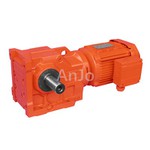
Gear Drive are fundamental components for the transmission of rotational power, torque amplification, and speed regulation in mechanical equipment. Through the precise meshing of gear teeth, they facilitate multi-dimensional power transmission-including coaxial, crossed, and perpendicular configurations-and are widely used in speed reducers, machine tool spindles, power units, and heavy-duty mechanical drive systems. Unlike rack-and-pinion systems (linear transmission), chain drives (flexible transmission), or worm gear sets (unidirectional self-locking transmission), industrial gears offer unique advantages: superior transmission efficiency, rapid instantaneous response, bidirectional rotation capability, suitability for high-speed and heavy-load operations, and reliability for long-term continuous use. They represent the most versatile and widely applicable rigid transmission components across the entire industrial sector.
ANJO mass-produces a comprehensive range of standard and non-standard industrial gears, strictly adhering to international standards such as ISO, DIN, GB, and JIS, with specifications spanning from lightweight precision gears to heavy-duty, large-module gears. Leveraging over a decade of expertise in precision gear manufacturing, we optimize our processes to address common industry issues-such as tooth breakage, pitting, surface wear, transmission vibration, and efficiency loss. By employing techniques such as carburizing and quenching, high-frequency surface hardening, and precision gear grinding with profile modification, we produce industrial gears characterized by high precision, exceptional wear resistance, and superior stability, meeting the needs for both original equipment integration and replacement across a wide range of domestic and international industrial machinery.
Models
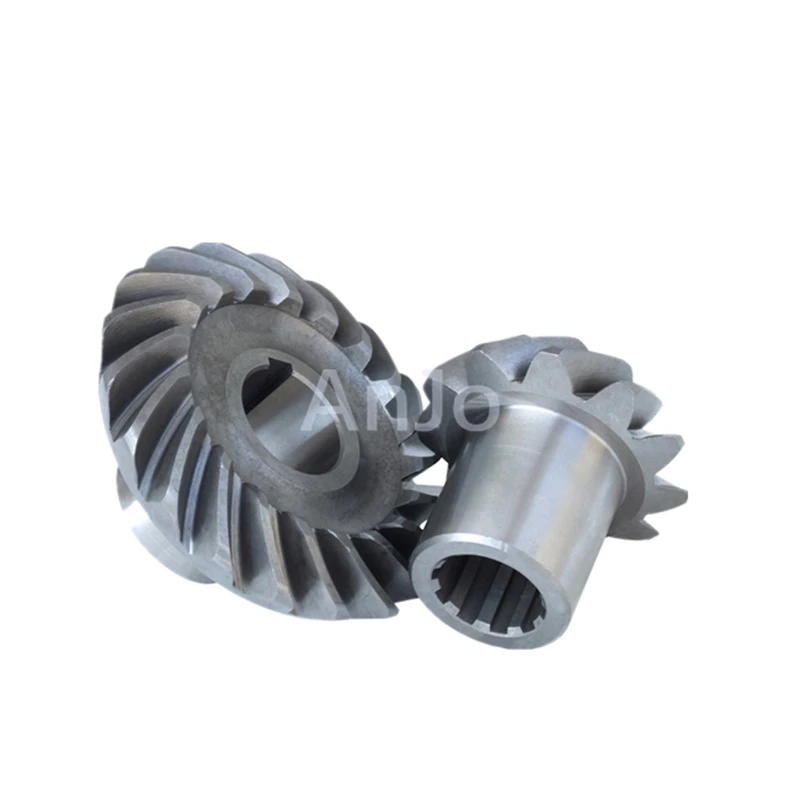
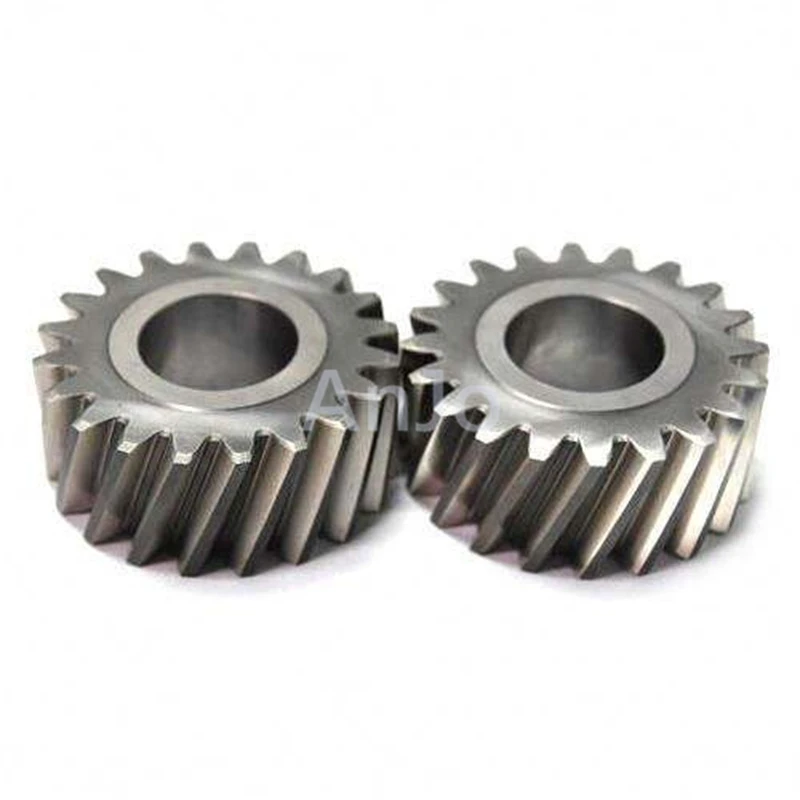
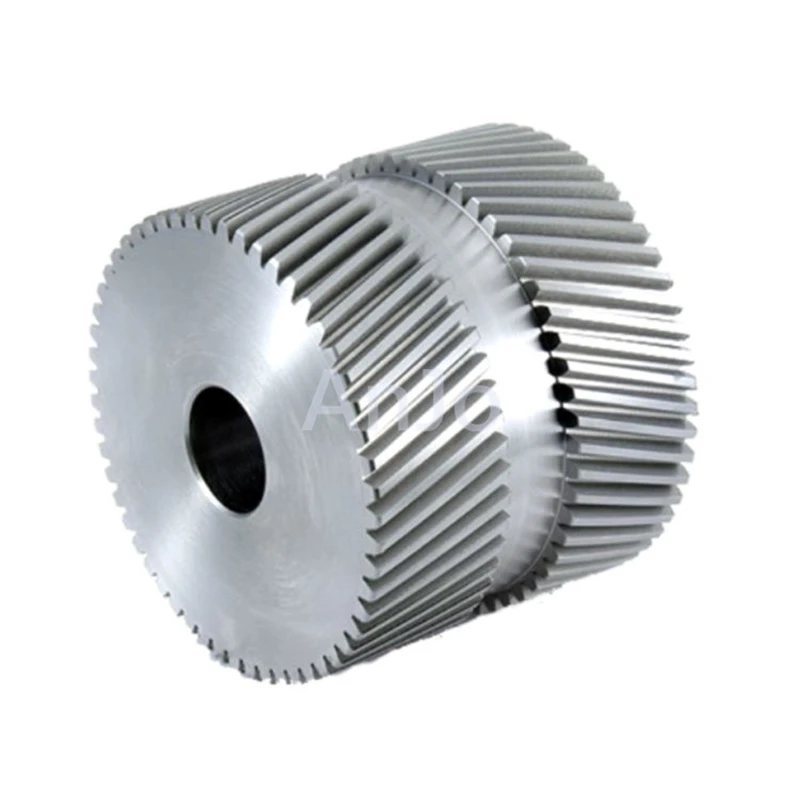
Types of Gear Drive
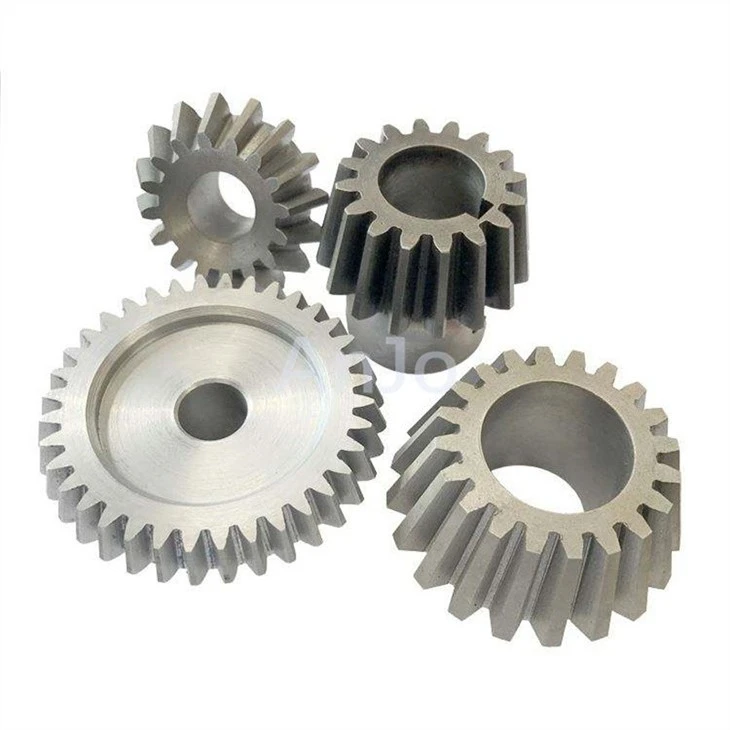
1. Spur Gears
Featuring straight tooth profiles, symmetrical load distribution, and consistent manufacturing precision, these gears generate no axial thrust during operation. They are easy to install and adjust, offer high tolerance for assembly variations, and provide excellent cost-performance value. Suitable for general-purpose transmission applications involving low-to-medium speeds, standard torque, and frequent forward/reverse switching, they are widely used in standard gear reducers, conveyor systems, general machine tools, and small power units. Customization options include non-standard tooth counts, modules, and bore sizes, as well as profile modifications such as tip relief.
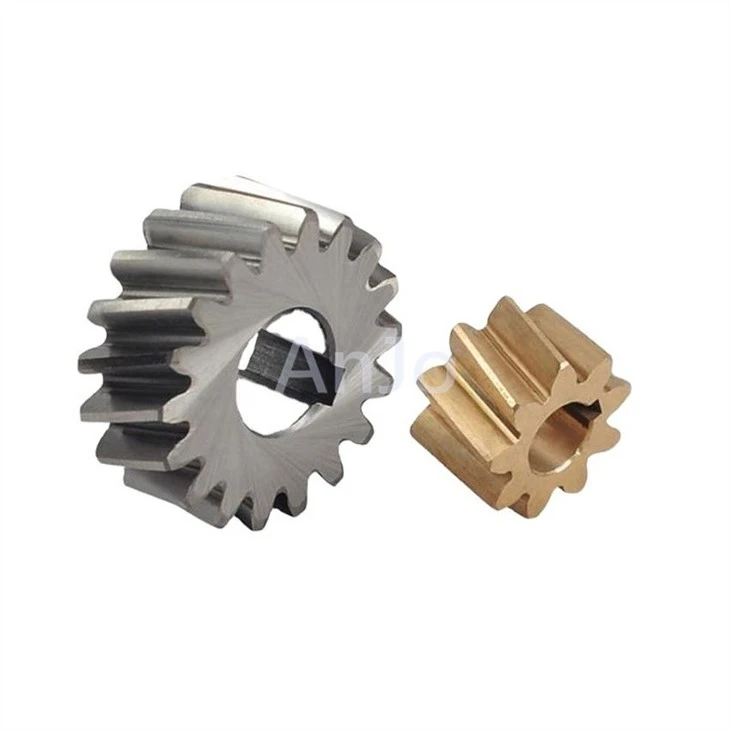
2. Helical Gears
Utilizing a staggered helical meshing structure, these gears offer a contact ratio significantly higher than that of spur gears, resulting in smooth, steady meshing that effectively minimizes vibration and noise while achieving transmission efficiencies of 97%–99%. Capable of withstanding high-speed operation and moderate-to-heavy shock loads, they are ideal for precision automation equipment, high-end machine tools, high-speed gear reducers, and new energy transmission systems, making them a preferred choice for high-precision, low-noise applications.
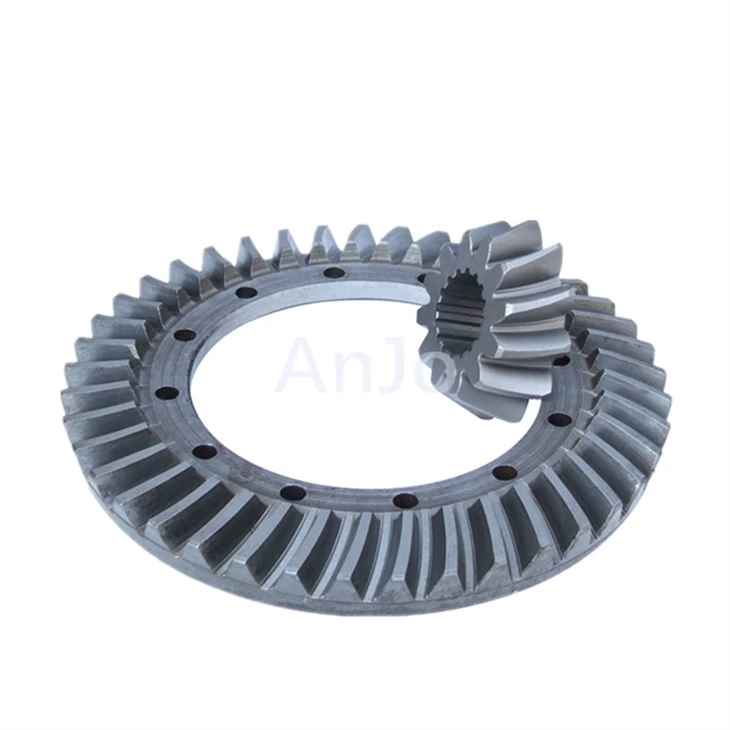
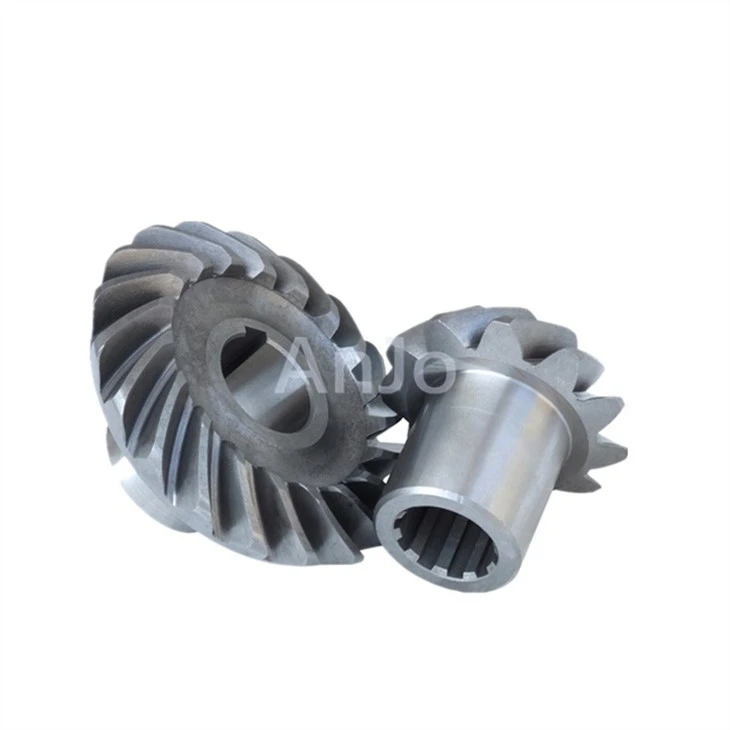
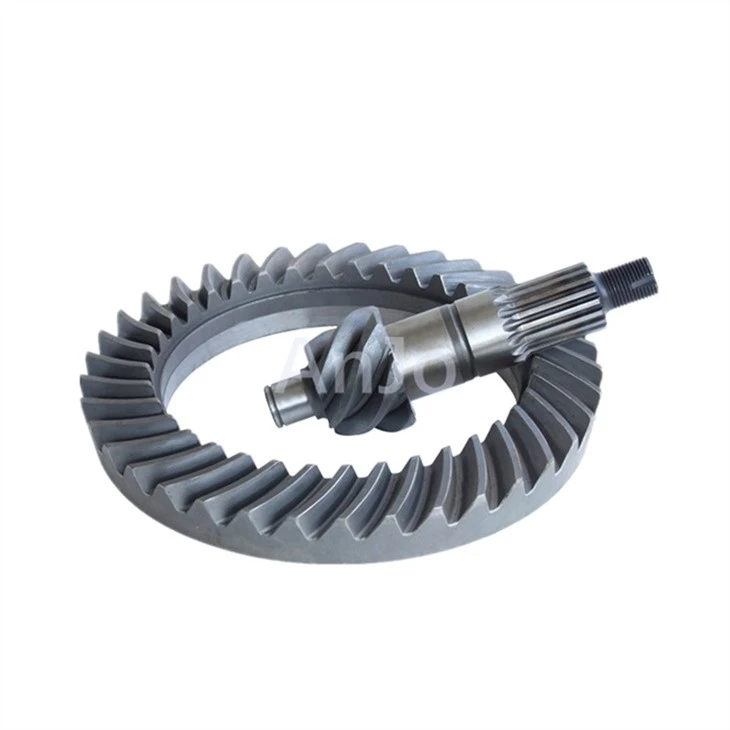
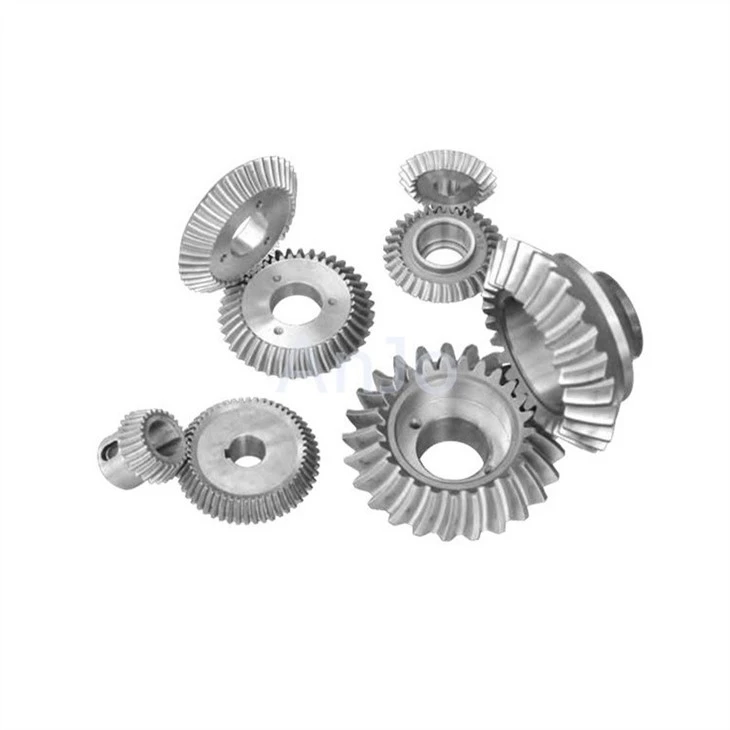
3. Bevel Gears
Designed specifically for power transmission between intersecting axes (typically at a 90-degree angle), these gears are available in three main categories: straight bevel, helical bevel, and spiral bevel. Spiral bevel gears, in particular, offer superior load-bearing capacity and smoother operation; they are widely used in construction machinery, mining equipment, lifting gear, automotive transmissions, and large-scale steering mechanisms to facilitate multi-angle power transmission.
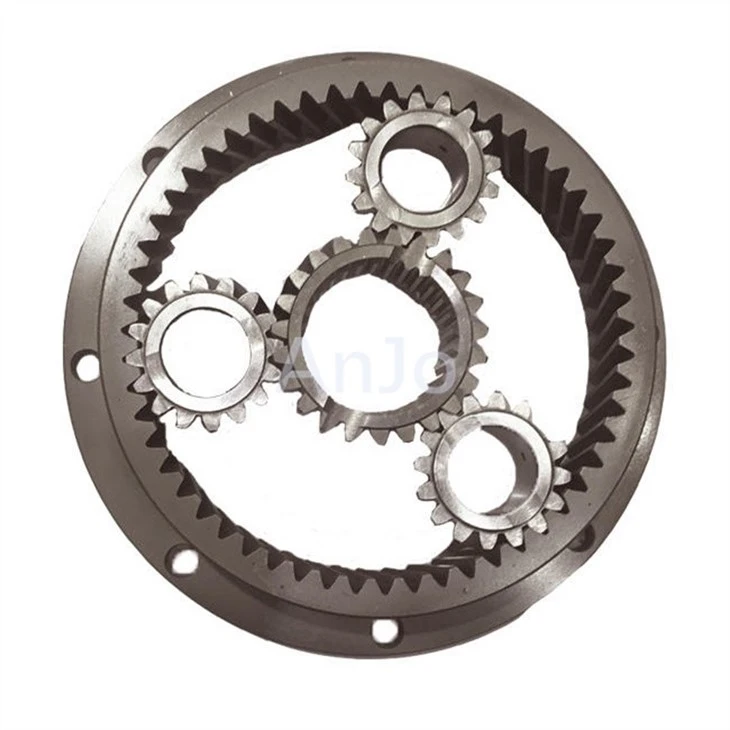
4. Planetary Gears and Internal Ring Gears
Planetary gear sets-comprising a sun gear, planet gears, and an internal ring gear-offer advantages such as compact size, high reduction ratios, high torque density, and coaxial transmission. They serve as core components in planetary gear reducers, precision servo drives, robotic joints, and compact, high-precision power modules. Characterized by a compact structure, uniform load distribution, and high fatigue resistance, they are well-suited for precision transmission applications requiring high accuracy, high torque, and limited installation space.
5. Precision-Ground Hardened Gears
Manufactured using a three-stage core process-carburizing and quenching, high-frequency surface hardening, and precision gear grinding with profile modification-these gears achieve surface hardness levels of HRC 58–64 and precision grades of ISO 6–7. The tooth surfaces are smooth and burr-free, with minimal profile error. Effectively eliminates issues such as tooth surface pitting, wear, and tooth breakage during long-term operation; offers a service life more than three times that of standard soft-surface gears, making it suitable for high-end precision equipment and 24-hour continuous operation.
6. Non-standard, custom-engineered gears
Supports the customization of large-module heavy-duty gears, corrosion-resistant stainless steel gears, high-temperature resistant gears, stepped gears, spline gears, and gears with special profiles or profile shifts. We offer precision reverse engineering and manufacturing based on specifications from imported equipment, samples from legacy machinery, or unique operational requirements. These gears serve as perfect replacements for imported parts, resolving common pain points associated with niche equipment-such as sourcing difficulties, long lead times, and high costs.
Features
- Ultra-high rigid transmission efficiency with minimal power loss: Features purely rigid gear meshing without losses from flexible deformation. Transmission efficiency under standard operating conditions exceeds 98%-far surpassing chain or belt drives-ensuring no power degradation during prolonged operation and effectively reducing energy consumption and operating costs.
- Hardened gear surface technology for wear and fracture resistance: Core load-bearing gears undergo integral quenching and tempering combined with surface hardening. This creates a tough, impact-resistant core and a highly hard, wear-resistant surface, effectively preventing failures such as tooth breakage, chipping, spalling, and pitting under heavy-load conditions.
- Precision customization across all parameters for seamless, modification-free installation: Supports full-dimension customization-including module, tooth count, pressure angle, profile shift coefficient, bore diameter, keyway, and face width. Designed to precisely match imported standards, these gears allow for direct replacement on existing equipment without the need for modifications or recalibration.
Application


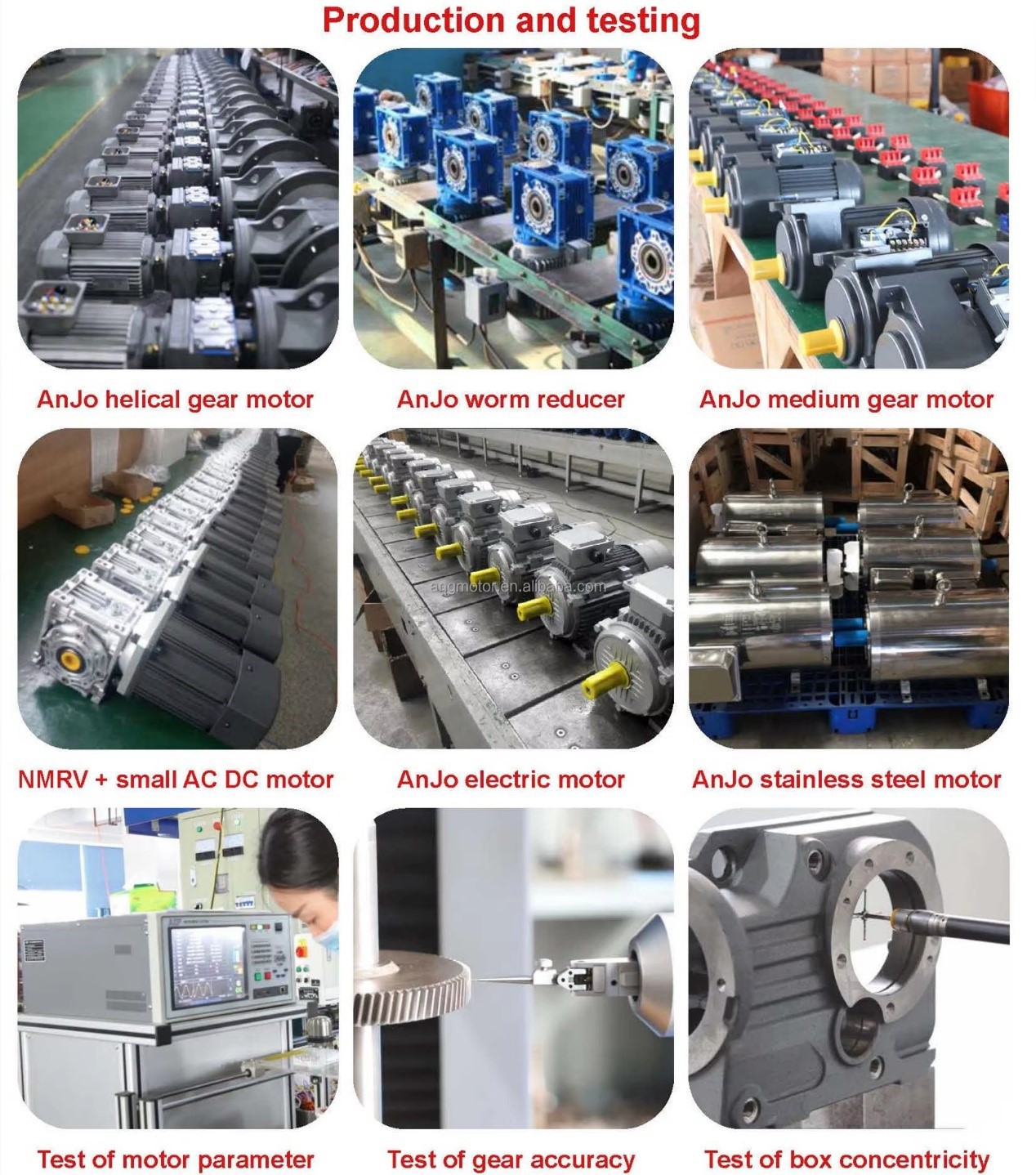
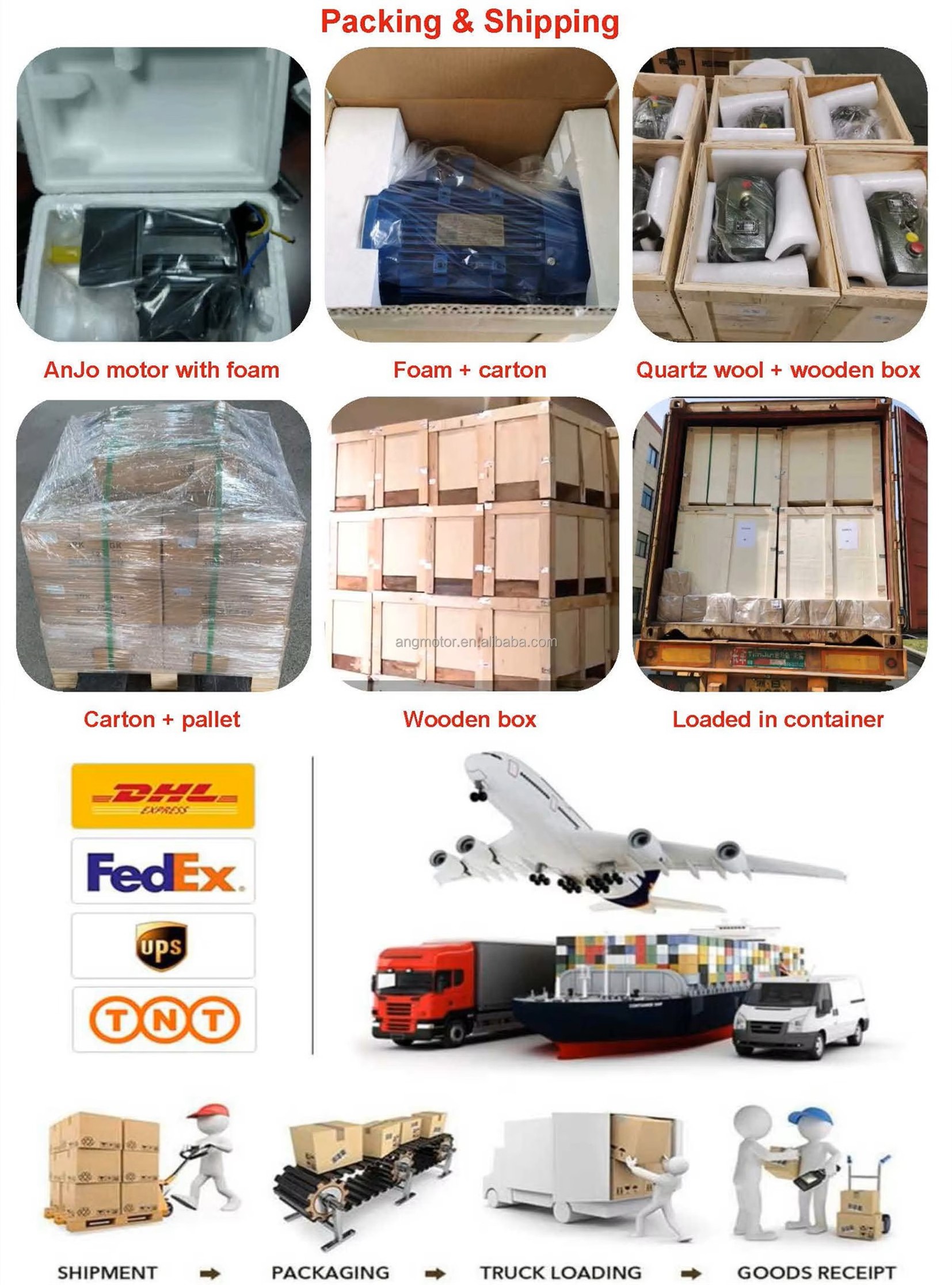
Company Profile


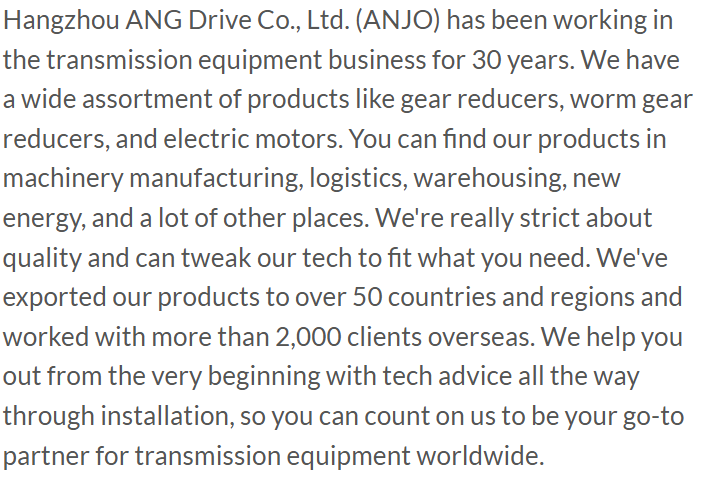


FAQ
Q1: How do you choose between hard-tooth-surface and soft-tooth-surface gears, and what are the differences?
A1: The core differences lie in hardness, wear resistance, and suitability for specific operating conditions. Soft-tooth-surface gears undergo only through-hardening and tempering; they feature lower tooth-surface hardness and lower costs, making them suitable for standard equipment involving light loads, low speeds, and intermittent operation. In contrast, hard-tooth-surface gears undergo quench hardening, resulting in high hardness and superior resistance to wear, impact, pitting, and tooth breakage; they offer significantly improved transmission stability and service life, making them ideal for industrial equipment subject to high speeds, heavy loads, and 24-hour continuous operation. For the vast majority of industrial continuous transmission applications, hard-tooth-surface gears are the preferred choice.
Q2: What causes abnormal noise and vibration during gear operation, and how can the issue be thoroughly resolved?
A2: The primary causes include five key factors: insufficient gear tooth surface precision, uneven meshing clearance, tooth surface wear or scoring, coaxiality deviations during installation, and inadequate lubrication. Minor noise issues can be mitigated by applying specialized gear lubricant and making fine adjustments to assembly clearances. However, persistent vibration and noise resulting from severe wear or tooth profile deviations require replacing the gears with precision-profiled ones and correcting installation alignment to fundamentally resolve issues related to unstable transmission, noise, and vibration.
Q3: Can gears with different pressure angles be interchanged? What are the consequences?
A3: Interchanging or mixing them is not recommended. While 20° is the standard pressure angle for industrial gears, some imported equipment utilizes special angles such as 14.5° or 25°. Mismatched pressure angles lead to poor meshing, stress concentration on tooth surfaces, rapid wear, and jerky transmission; in severe cases, they can cause tooth breakage or failure. Replacement parts must strictly match the original pressure angle specifications; our factory offers custom manufacturing for gears with non-standard pressure angles to ensure a perfect mesh.
|
|
|
|
|
|
|
|
|
|
|
|
|
|
|
|
|
|
|
|
|
|
|
|

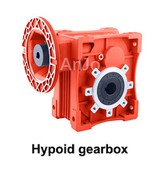
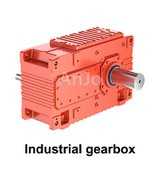


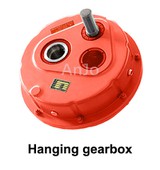
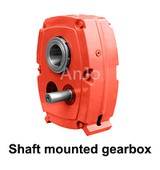
Hot Tags: gear drive, China gear drive manufacturers, suppliers, factory
Previous
NMRV Worm Gear ReducerYou Might Also Like


Send Inquiry